Broken Markets - Review

image

Introduction

The authors begin their introductory chapter stating that gone are the days when the primary purpose of stock market was capital allocation. Instead, they say,

The primary purpose of the stock exchanges has devolved to catering to a class of highly profitable market participants called high frequency traders, or HFTs, who are interested only in hyper-short term trading, investors, be damned

Indeed if one looks at some of the basic numbers that drive volumes, it is clear that HFT firms have become exchanges’ biggest customers.

An Introduction to Probability and Inductive Logic

image

With total silence around me and my mind wanting to immerse in a book, I picked up this book from my inventory. I came across a reference to this work in Aaron Brown’s book on Risk Management.

First something about the cover:

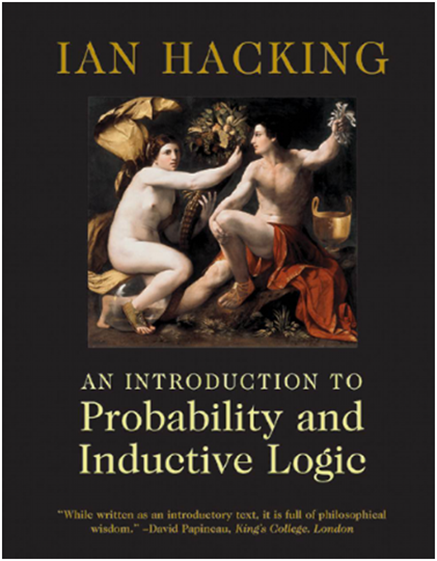
The young woman on the right is the classical Goddess Fortuna, whom today we might call Lady Luck. The young man on the left is Chance. Fortuna is holding an enormous bunch of fruits, symbolizing the good luck that she can bring. But notice that she has only one sandal. That means that she can also bring bad luck. And she is sitting on a soap bubble! This is to indicate that what you get from luck does not last. Chance is holding lottery tickets. Dosso Dossi was a court painter in the northern Italian city of Ferrara, which is near Venice . Venice had recently introduced a state lottery to raise money. It was not so different from modern state-run lotteries, except that Venice gave you better odds than any state-run lottery today. Art critics say that Dosso Dossi believed that life is a lottery for everyone. Do you agree that life is a lottery for everyone? The painting is in the J. Paul Getty Museum, Los Angeles, and the above note is adapted from notes for a Dossi exhibit, 1999.

Dynamic Documents with R and knitr – Summary

bookcover_knitr

Link :

Detailed Book Summary(pdf)

image Takeaway:

Imagine that you were using a clunky and a painful email service and suddenly one day you are shown gmail. Aren’t you thrilled ?. It’s elegant, quick and has a ton intuitive features. I had the same feeling with knitr after having painfully used Sweave for a long time.  I am certain that this package will stand out as the goto package for literate programming for a very long time to come because it is elegant, quick and has features that you were always trying to patch in via other packages. Should you read this book? Well, if you have the patience and time to go over the manual and a thousand posts from stackoverflow and other places to know the various features of the package, you don’t need this book. However if you are like me who is short of time, values content that is organized and prefers to know the key hacks from the package, this book is definitely worth it.

Ustad Alauddin Khan

image

This book is written by Ustad Alauddin Khan’s great grand daughter, Sahana. She narrates the story of Ustad Alauddin Khan piecing together various handwritten manuscripts and stories from her grandparents house.

Tracing the family tree, Sahana discovers that Alauddin Khan’s ancestors were actually Hindus. Somewhere along the way, one of his ancestors converted to Islam and married a Muslim. AK’s father was a Sitar player and the music rubbed on to AK from a very young age. By the age of seven, AK had already decided to give up school and devote his life towards music. At the age of eight, AK stole money from his mom’s safe box and left home in search of a guru. He traveled ticketless to Calcutta and not knowing anyone in Calcutta survived on some food doled out to beggars, slept on the entrance of a dispensary for many days.

First, Learn to Practice – Book review

book_cover

Here is the author’s bio from his website :

Tom Heany has been involved with musician his whole life, as a student, a teacher, a player, a writer and, yes, a practicer - for 13,000 hours, give or take a few.For 18 years he was the Director of Programming for the National Music Foundation, where he developed and ran the American Music Education Initiative and the Berkshire Music Festival. As a contributing editor for the National Guitar Workshop, he wrote about musical subjects ranging from the Grammy Awards to Tuvan throat-singing. For WorkshopLive, NGW’s online learning platform, he interviewed guitar, bass and piano teachers about their views on practicing, performing and playing.

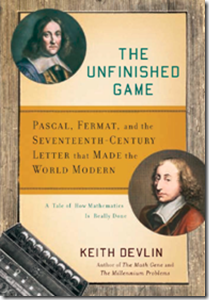
The Unfinished game – Review

image

This book is about a set of letters exchanged between Pascal and Fermat in the year 1654 that led to a completely different way of looking at future. The main content of the letters revolved around solving a particular problem, called “problem of points”. A simpler version of the problem goes like this:

Suppose two players—call them Blaise and Pierre—place equal bets on who will win the best of five tosses of a fair coin. They start the game, but then have to stop before either player has won. How do they divide the pot? If each has won one toss when the game is abandoned after two throws, then clearly, they split the pot evenly, and if they abandon the game after four tosses when each has won twice, they do likewise. But what if they stop after three tosses, with one player ahead 2 to 1?

Solitude

Happy the man, whose wish and care
A few paternal acres bound,
Content to breathe his native air
In his own ground.

Whose herds with milk, whose fields with bread,
Whose flocks supply him with attire;
Whose trees in summer yield shade,
In winter, fire.

Blest, who can unconcern’dly find
Hours, days, and years, slide soft away
In health of body, peace of mind,
Quiet by day.

Sound sleep by night; study and ease
Together mixed; sweet recreation,
And innocence, which most does please
With meditation.

Working Memory

**What we process, we learn.  If we are not processing life, we are not living it.

Live Life !**

Analysis of Integrated and Cointegrated Time Series with R – Summary

image

There are broadly three aspects that one needs to spend time on,while learning about any statistical model.

  1. Intuition behind a model in describing a problem/phenomenon/scenario.

  2. Nitty gritty of the model : The assumptions of the model, its functional form, the math behind parameter estimation, the way to plot the data and perform diagnostics, do forecasting based on the model and do structural analysis with the model.

  3. Simulating data from a known data generating process and code up the functions to check your understanding of parameter estimation, diagnostics, forecasting etc.

Applied Econometric Time Series – Summary

image

The book starts off by stating,

Time series econometrics is concerned with the estimation of difference equations containing stochastic components.

Hence the book naturally begins with a full-fledged chapter on difference equations.

Difference Equations

A few examples of difference equations are given such as Random walk model, Structural equation, Reduced form equation, Error correction model to show the reader that difference equations are everywhere in econometrics.Any time series model indeed is trying to explain a univariate variable or a multivariate vector in terms of lagged values, lagged differences, exogenous variables, seasonality variables etc. The representative structure for the time series model is a difference equation. Any difference equation can be solved by repeated iteration, given an initial value. If the initial value is not given, it can be chosen in the form that involves infinite summation and the solution thus obtained by repeated iteration is just one of the many solutions that the difference equation can possess. However this method of repeated iteration breaks down for higher order difference equations. The chapter then talks about systematically finding the solutions to a difference equation using the following four steps :
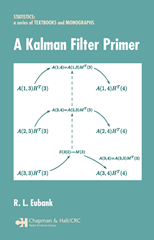
A Kalman Filter Primer : Summary

image

imageTakeaway :

The strength of this book is the focus on the simplest state space model and then showing all the aspects of Kalman Filter framework and related pseudo-codes for filtering, smoothing. The novelty of this book is the central focus on the idea of orthogonalization of observation data. This makes all the Kalman Filter related formulae take convenient forms that one can intuitively as well as rigorously understand. One thing missing from this book is the discussion of numerical stability of filtering and smoothing algorithms, considering that the purpose of the book is to enable the reader code up his/her own KF functions.

State Space Time Series Analysis : Summary

image_thumb[5]

State Space Methodology serves as an umbrella for representing many univariate, multivariate stationary and non stationary time series. For those who have never heard of a “State Space Model” but have used some software for any time series model parameter estimation, the motivation is this : It is likely that the software used has a state space representation of the model in the implementation. For example, in R, the implementation for the function arima() says,

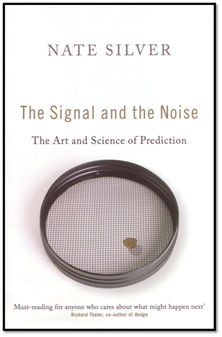
The Signal and the Noise : Review

image

I had been intending to read this book for many months but somehow never had a chance to go over it. Unfortunately I fell sick this week and lacked strength to do my regular work. Fortunately I stumbled on to this book again. So, I picked it up and read it cover to cover while still getting over my illness.

One phrase summary of the book is “Develop Bayesian thinking”. The book is a call to arms for acknowledging our failures in prediction and doing something about it. To paraphrase author,

Quote for the day

Love your life and you’ll lose it. Risk it and maybe, just, you’ll totter into heaven — the place of both annihilation and total knowledge; the place of beauty and joy. The risk is absolute, you’ll get nothing else out of it, not pleasure, not health, not affection, not comfort and certainly not safety. Just the beauty of God.

- Sara Maitland

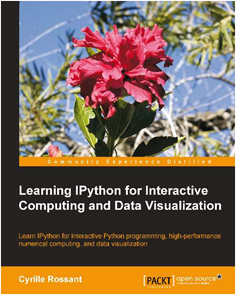
Learning IPython for Interactive Computing and Data Visualization : Review

image

I have not been tracking many developments in the Python world for various reasons. Recently I stumbled on to this book and learnt that a ton of things have happened since the last version of my IPython installation. In the last one year or so, it has found a very strong community of pythonistas and is being used by professors in their classrooms. ipynb is turning out to be a format for submitting  programming assignments. With the nbviewer, all one has to do is to create a gist on github and anybody can view the notebook over the web. Here’s a Michigan university Professor narrating his experiences of using IPython in his class. Here’s someone writing about his experience of using it in a class at Columbia, All these are great developments show the general acceptance of Python as a language.  Recently I came to know that CBSE (India) has replaced C++ with Python for class XI students for 2013-2014 curriculum.

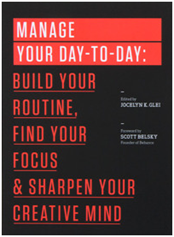
Manage your day-to-day

image

If you interview some of the brightest minds in the world and get to know about their productivity hacks (sometimes their role model’s hacks), and compile all of their ideas in to a format that is easily digestible, you get this book.

Nothing in this book is really something that one would not have come across. But  it is easy to forget hacks that make our lives productive. Sometimes reading other’s work habits can create awareness of the way we go about doing our work.

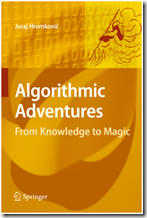
Algorithmic Adventures : Review

image image

This book takes a rather difficult topic, “algorithmic complexity”, and explains it in a way that any reader with a bit of curiosity towards algorithmic world can understand most of its contents. This is actually not a book in the traditional sense of it. ETH Zurich offered a public lecture series called, “ The Open Class – Seven Wonders of Informatics” in the fall of 2005 and this book has been written based on those lecture series. 

The First 20 Hours : Review

image

I firmly believe that when you are trying to learn something, it is always “easy come, easy go”.  It is also applicable to other aspects like love, friendship etc. A friend who seems to come in to your life effortlessly also fades out of your life quickly. So, is the case with love, I guess. 

This book is total crap. The author gives a sermon on how to learn things in the first twenty hours. Most of what he writes is taken from books that I have already come across. Nothing is original. Amazing really..people can’t even bring originality in crap!. As though he has to justify his crap, he mentions about using his methods to learn Yoga, Touch typing, Go, Ruby programming, instrument called Ukulele and windsurfing.

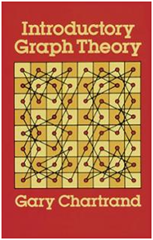
Introductory Graph Theory : Review

image image

The cover page of the book gives the solution to the popular puzzle,

Is it possible for a knight to tour the chessboard, visiting every square once and only once, and return to its initial square?

The solution to the puzzle lies in thinking about a graph containing vertices as squares of the chess board and the adjacency of two vertices based on the validity of a knight move. If you want to solve such a problem for a general n*n square, you need a graph processing algorithm.

Algorithms–Review Part I

image

Part I - Fundamentals

The first part of the book creates the necessary background for the reader to understand the various algorithms discussed in the book. The book implements all the algorithms in Java. Its not a problem if you are rusty with Java. The authors give some basic crash course on the language, just enough to understand all the algorithms. I have forgotten Java long back. I think it has been a decade since I have coded any Java program. However the code and the commentary for the code is crystal clear thus making it is easy for any non-java reader to follow the code and implement in a language of their choice. There are two essential aspects that are discussed in the first part of the book. First, it explains the main data structures like Bags, Queues, Linked lists, Doubly linked listed that are essential building blocks for all the algorithms in the book. Secondly, it explains the concepts behind analyzing the performance of an algorithm. When I look at these concepts, I think these need to understood just once and they are yours for lifetime. Basic principles of performance analysis are described in detail and I guess they ensure that every time you come across an algorithm, the first question that typically will pops up in your mind  is, “what’s the order of running time ?” . Answering this question allows one to connect with various algorithms that have similar running time. For example FFT algorithm is of O(N log N). Well, FFT achieves N log N by the same divide and conquer method that a merge sort algorithm uses.

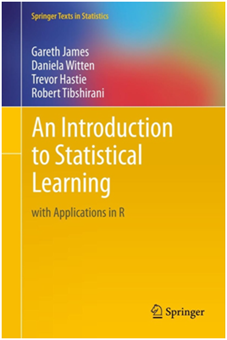
An Introduction to Statistical Learning : Review

image

Elements of Statistical Learning” (ESL) is often referred to as the “bible” for any person interested in building statistical models. The content in ESL is dense and the implicit prerequisites are good background in linear algebra, calculus and some exposure to statistical inference and prediction. Also, the visuals in ESL come with no elaborate code. If you don’t want to take them at face value and would like to check the statements / visuals in the book, you have got to sweat it out.

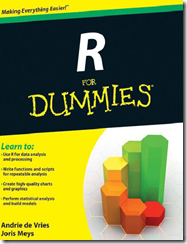
R for Dummies : Review

book_cover

“Dummies” books, despite their popularity are scorned by experienced programmers for various reasons. One of them, I guess is that such books lead a newbie in to understanding the subject as a motley collection of recipes for various tasks. Be that as it may, this book is a very well organized book catering to a newbie R programmer.

A few years ago, books such as these on R were just not available. R being written “by statisticians”, “for statisticians” had a steep learning curve for a beginner. Thanks to the massive increase in the number of packages, online forums , R has hit mainstream and I think a surest sign of this is when you see a dummies book on it.

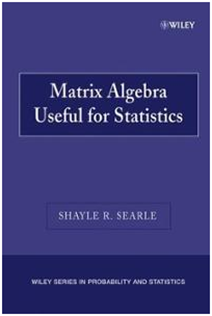
Matrix Algebra Useful for Statistics : Review

image

Matrices are everywhere in statistics. Every linear model involves some kind of a generalized inverse calculation of the design matrix. Statisticians, data analysts etc. are always dealing with datasets that might have repeated measurements, repeated observations, noise etc.

The matrix is never full row rank matrix. This means that the traditional inverse applicable for a square matrix has to give way to something less restrictive and hence a generalized inverse clip_image001 is needed. [clip_image001[1] is not unique. If you find one, you can manufacture a ton of other solutions to the set of equations[clip_image002. In some of the texts on linear algebra course this is often introduced as Pseudo inverse [clip_image003, the name implying that it is not exactly an inverse. The generalized inverse arises from a matrix that satisfies the first of the four Moore-Penrose conditions.


An Illustrated Guide to LP : Review

image

One can conveniently describe a linear programming problem by stating the goal as minimizing / maximizing a function given a set of constraints.

image

The word “linear” restricts the objective function and constraints to have a linear form. Despite this seemingly harsh restriction, LP can be used to attack a LOT of problems. This book is a Linear Programming 101 book and a book with visuals. I am a big fan of books with visuals. The first thing the author emphasizes is

The Buy Side : Review

image

The book is a story recounted by Turney Duff about his rise and fall on the Buy side. Turney Duff graduates from Ohio university in 1994 and starts hunting for a job on Wall Street. Thanks to his uncle Tucker and a random conversation about a soap opera with a HR lady, he gets a job at Morgan Stanley in Private Wealth group as a Sales assistant. Three years later, his dream of getting in to trading seems like a mirage until one day he gets a chance to organize a party. He writes a newsletter that catches the imagination of everyone. The party meant to boost the morale of the employees is a grand success and Turney becomes an instant hit among all the dealers and the top management. He thinks that this event might get him a trading job. Instead, two years pass and he is still a sales assistant at Morgan. His ex-Morgan colleagues help him in getting a job at Galleon where he starts trading health care stocks.

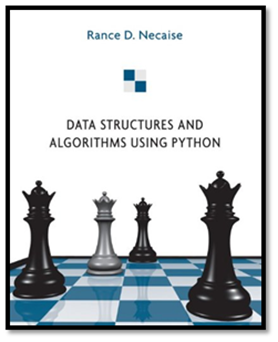
Data Structures and Algorithms using Python

image

There aren’t many Python books that talk about Data Structures. One of the reasons could be that Python provides a rich set of collections like list, dict, queue, set etc. that writing a new Data Structure might be unnecessary. That being the case, it is always helpful to know the time complexity of various operations in list, dict,etc. For some of the algorithms based on trees and graphs, there is no option but to build an abstract data structure to suit the problem one is trying to solve. This book discusses all types of data structures using Python.Even though the book uses Python and the code eats up a lot of paper in the book, there are bugs in several code fragments and there is no errata anywhere on the web. In any case, let me list down some of the points from the book. and certainly not on the author’s website.

Quote for the day

Mathematicians find it easier to understand and enjoy ideas which are clever rather than subtle. Measure theory is subtle rather than clever and so requires hard work to master.

-- T. W. Körner

The Laplace Transform : Review

image

Laplace Transform is a very useful technique as it can be used in a ton of problems in various contexts. Here’s a random sample of the places where it’s use makes computations elegant :

  • Solving Difference equations in various Queueing configurations.

  • Renewal theory – Solving Key Renewal equation.

  • Solving specific type of ODEs.

  • Solving specific type of PDEs.

  • Computing convolution of two functions.

  • Moment generating function computations.

In most of the applied math books, all one sees is a table, tucked away in the Appendix, that lists out function and its Laplace transforms. Books such as these helps one see the real math behind the Laplace transform. The chapters are sequenced in an increasing order of difficulty. It starts off with the basic definition of the transform and discusses the convergence aspects. The following points are covered in the first chapter of the book

Complex Analysis : Review

image

Complex Algebra crops up in a ton of places in applied math. I came across an application of complex algebra in the context of Inverse Laplace transforms and could not understand some aspects of it. Looked around a bit and stumbled on this book that seemed to explain the principles of complex analysis in an elegant way. Let me summarize some of the main points in the book.

Chapter 1: What do I need to know?

Probability Theory in Finance : Book Review

image

This book reminds me of “Elementary Stochastic Calculus with Finance in view”, a book by Thomas Mikosch, in terms of the overall goal. This book has a goal of making the reader understand the nuts and bolts of Black Scholes pricing formula. Probability theory, Lebesgue integration and Ito Calculus are the main ingredients in the Black Scholes formula and these rely on set theory, analysis and an axiomatic approach to mathematics. Any thing in math is built ground up. This means that every idea/proof/lemma/axiom is pieced together in a logical manner so that the overall framework makes sense. This book introduces all the necessary ingredients in a pleasant way. There are some challenging exercises at the end of every chapter and the reader is advised to work through all of them, and the author motivates the reader by saying

Weighing the Odds : Book Review

image[image

Right from the preface of the book, Prof. David Williams emphasizes that intuition is more important than rigour. The definition of probability in terms of long term frequency is fatally flawed and hence the author makes it very clear in the preface that “probability works only if we do not define probability in the way we talk about probability in the real world”. Meaning colloquial references to probability gives rise to shaky foundations. However if you build up probability theory axiomatically then the whole subject is as rigorous as Group theory. Statistics in the modern era is vastly different from yesteryears. Computers have revolutionized the application of statistics to real life problems. Most of the modern problems are solved by applying Bayes’ formula via MCMC packages. If this statement is surprising to you, then you should definitely read this book. Gone are the days when statisticians used to refer to some table of distributions, p-values etc. to talk about their analysis.In fact in the entire book of 500 odd pages, there is only about 15 pages of content on hypothesis testing and that too with a title “Hypothesis testing, if you must”. Today one of the critical ingredients of a statistician’s tool box is MCMC. Ok, let me attempt to summarize this book.

Simulation and Inference for Stochastic Differential Equations : Review

image

Solving an SDE analytically can be done only in few instances(toy SDEs). For the majority of the cases, one solves it numerically. Having said that, this book can be read by anyone who is interested in understanding SDEs better. Simulation is a great way to understand many aspects of Stochastic processes. For example, you can read through Girsanov theorem for change of measure, but by visualizing it through a few sample paths, you have a deeper understanding . I have managed to go over only the chapters that deal with simulation and my summary would obviously comprise only those chapters,i.e. the first two chapters. I have postponed reading Chapter 3 that goes in to inference and Chapter 4 that comprises a set of advanced topics. May be I will find time to go over it in the future. For now, let me mention a few points from the book.

Brownian Motion Calculus - Review

image

This book gives a non-rigorous treatment to Brownian motion and its applications to finance. Let me summarize a few points from various chapters.

Chapter 1 : Brownian motion

This chapter starts off by specifying Brownian motion by the properties of its increments such as independence, first and second moments, transition density etc. A discrete approximation of BM is shown via a binomial tree. Covariance of BM process is derived. A way to manufacture correlated BM is shown. Illustrations are provided to show that BM is nowhere differentiable. The most important property of BM, the quadratic variation, is shown via a few simulation runs.

RSVP

Speed reading online content - RSVP - Rapid serial visual presentation( Via Wiki)

The unique method used by RSVP allows for the reading of unlimited text in a limited position. Researchers from Carnegie Mellon have found that as many as 12 words per second are readable in controlled situations (720wpm).Further research has shown that for shorter pieces of text, RSVP formats increased reading speed by 33% with no significant differences in comprehension or task load.

Stochastic Calculus for Finance II : Review

image

Steven Shreve’s books on Stochastic calculus (Volume I + Volume II) are amazing in terms of breadth. Basic intuition is built in Volume I using a discrete-time binomial asset pricing model. In Volume II, the author introduces all the concepts needed to build a financial model in continuous-time. In this post, I will try to summarize a few points from Volume II.

Chapter 1: Introduction

The most important mind shift that one needs to make when moving from the discrete-time case to continuous-time case is that of “uncountable outcome space”. This means that intuitive understanding of probability is not enough. One needs to have a decent understanding of measure theory. The first chapter and second chapters of the book serve as a crash course to measure theory.