Big Data : Review

image

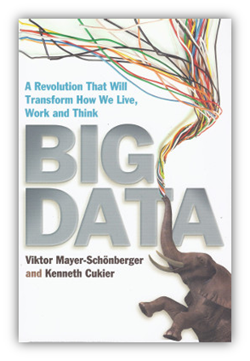
“Big Data” has entered every one’s vocabulary, thanks to the wild success of few companies that have used data to provide valuable information and services. This book gives a bird’s eye view of the emerging field.

The book starts off with an interesting example of the way Google predicted the spread of flu in real time after analyzing two datasets, first one containing 50 million most common terms that Americans type and second one containing the data on the spread of seasonal flu from public health agency. Google did not start with a hypothesis, test a handful models and pick one amongst them. Instead Google tested a mammoth 450 million different mathematical models in order to test the search terms, comparing their predictions against the actual flu cases. They used this model when H1N1 crisis struck in 2009 and it gave more meaningful and valuable real time information than any public health official system.

Everything That Can Happen to You Happens Today : Review

image

The author of this book, Anatoly B. Schmidt, has written a book on Market Microstructure and an introductory book on Quant Fin for Physicists 

Schmidt is a Physics PhD from Russia who moves to NY and joins the quant-bandwagon on Wall Street. From a person like that one might expect that his autobiography would contain war stories about building-tweaking-testing-implementing models. Unfortunately this book mentions none whatsoever. Instead the author writes about his affairs with various women and his failed marriage. Utterly useless book.

Financial Calculus : Review

image

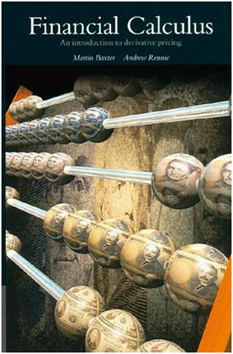
The book begins with a brief note that highlights the difference between “expectation pricing” and “arbitrage pricing”. It gives an example of a bookmaker, someone who takes bets on horses. The bookmaker can always stay in the business by setting up odds based on the money at stake, rather than based on actual probabilities. If the book maker does a statistical analysis of horse performances,track conditions, historical data, etc.. and then sets the odds, there is always a possibility of a huge loss and getting wiped out. If the odds are quoted based on the amount bid on various horses, whatever be the outcome, he can always stay in business. This one little page in the preface is illustrative of the powerful technique to price financial instruments, i.e. “arbitrage pricing”.

The Physics of Wall Street : Review

image

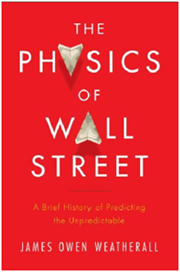
In the recent years there have been a lot of books written about quants on Wall Street. Some of the books have been a journalistic account of people, events, technologies that have revolutionized Wall Street. Some of the books are more technical that look like applied math/stats books. This book is a welcome addition to the existing literature. The book has been written by a Physics PhD who traces the rise of Physicists on Wall Street. Emanuel Derman wrote his story (My Life as Quant) way back in 2004 and after a long gap, this is another book from a Physicist.

coffitivity

For some, coffee is a big stimulant and for some the ambience that goes with it, the coffee shop.

Here is a site that provides the right amount of ambient noise of a coffee shop Smile.

Link : Coffitivity

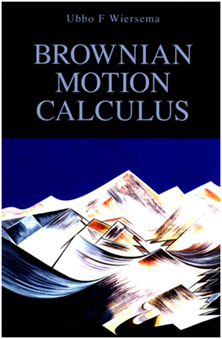
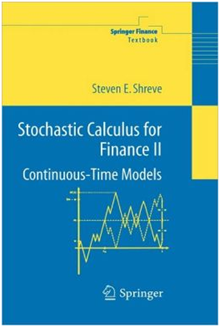
Stochastic Calculus for Finance – I : Review

image

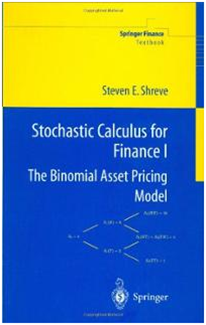
The purpose of the book is to illustrate various asset pricing concepts in a coin tossing world. Imagine a world where there is a money market instrument, an underlying security and various derivatives written on the underlying security. This world has a peculiar feature, i.e., the stock price can move up or down based on a coin toss. So, if one is looking at an option that has expiry 3 units from the current time, there are 8 outcomes of the stock price based on 8 coin toss realizations (HHH,HTH,HHT,HTT,THH,TTH,THT,TTT). Also, the probability of heads and tails are known upfront. One can’t think of a more simpler world for understanding option pricing. So, given this setting, the book explores the valuation of the following securities:

Advanced Trading–Apr 2013

image

  • HFT firms  profits reportedly have slumped from nearly $5 billion four years ago to $1 billion last year

  • GETCO, the largest HFT player in the U.S.markets profits from HFT shrank 82% last year.

  • Move from Ultra High frequency to Mid frequency strategies might happen as the former gets arbed out.

  • According to a study by TABB Group, HFT is expected to rise to 52% of average daily volume this year. HFT will generate $2 billion in revenue in 2013, TABB Group predicts in a report on U.S. equities. But is the slump in profits going to impact the marketplace liquidity that institutions rely upon?

Non-Life Insurance Mathematics : Review

image

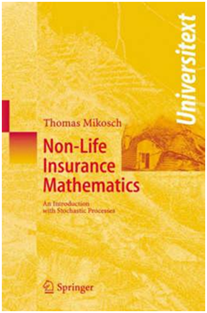
I have gone through the book so that I can understand the application of compound Poisson process model and the estimation of relevant parameters. The book, as is evident from the title, talks about the math in insurance context. I like “One example” books where a single example is explored in all dimensions throughout the book. This is one such book where the data relating to “Danish fire insurance” is used to illustrate various modeling principles. This dataset comprises the claim arrivals and claim sizes of a fire insurance firm between 1980 and 1990. The book is rich in visuals and that’s a real nice thing about this book.

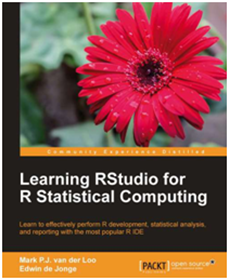
Learning RStudio for R Statistical Computing : Review

image

I stumbled on to RStudio (an open source IDE ) 2 years ago and felt there was a need for a lot of improvement before I could make a switch from eclipse IDE. As I check out the features of it, I see that there has been a ton of improvement in the features. I went through this book to get a basic overview of all features at once. The RStudio site has a set of documentation pages that looks equally good. The only advantage in reading this book is that all the things about RStudio are organized and presented in a systematic manner.

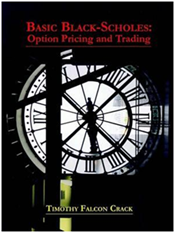
Basic Black Scholes : Review

image

I had to vacate my old flat and move to a new apartment recently and hence had to shift all my books. This entailed categorizing all of them to suit the new shelf space. It was quite an effort and I had to take a day off from work to get the task done. In the process, I stumbled on to this book that was lying in my inventory for many years. This book was published way back in 2004 and I bought it sometime in 2007 thinking that it might give me a 10,000 ft. view of Black Scholes. Working on details sometimes might make one miss the forest for the trees. Books such as these, exist to provide intuition behind the option pricing math. Having said that, the math in the book is not dumbed down as title might seem to suggest. I read this book after 6 years of purchase. At this rate, I think I will barely manage to read all the books that I have, by the time I die Smile.

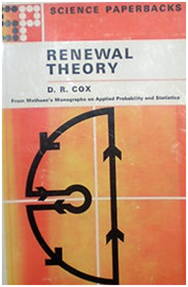
Renewal Theory : Review

image

The principles of Renewal theory are seen in various stochastic processes such as Countable State Markov chains, Continuous Markov processes, Semi-Markov processes, Regenerative processes etc. In one sense, spotting a Renewal process in a complicated stochastic process makes life easy as one can use the concepts from renewal theory to talk about the ensemble average and limiting time averages of the process. This book belongs to the “classics” genre of Renewal theory. Let me attempt to summarize the main chapters of the book.

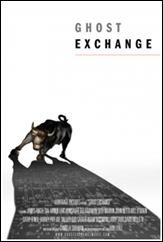
Movie on HFT

Via Ghost Exchange Trailer

imageGhost Exchange probes the current state of US capital markets, the impact of high frequency and algorithmic trading, the lack of, or ineffective regulatory oversight and the risks that are now inherent in our markets by going right to the source –Wall Street’s leading insiders – who shine a light on startling signs that the US stock market has built so much speed and complexity into the current system that it is impossible to regulate.  The system has become – a Ghost Exchange.

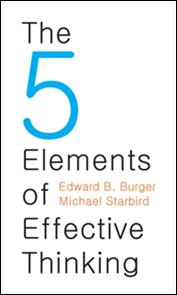
The 5 Elements of Effective Thinking : Review

image

The authors are math professors at Princeton. This book is a result of a 7 year effort. It distills all their math teaching experiences in to 150 pages. The book is targeted towards general audience even though most of anecdotes are from a classroom environment.

The authors use the 5 classic Greek elements that were thought to be the foundation of everything – Earth, Fire, Air, Water and Quintessential – to lay out the principles of effective thinking. The authors had approached Princeton university press with a novel idea, i.e., make three copies of the same book and bundle it to one fat book and sell it. The thought process being the book needs to be read at least three times. In the first read, you should read cover to cover to get the big picture of the book. In the second read you are supposed to pause at various points of the book and go over the action items carefully and in the third read, you are to read randomly across various sections and see the connections. The Princeton press with all due respect to the authors rejected their novel idea. So, the book is just about 150 pages but definitely deserves to be read a couple of times to get the best out of it.

The End of Your Life Book Club : Review

image

The book is about the conversations the author Will Schwalbe has with his mother while she underwent pancreatic cancer treatment.

Mary Anne, the author’s mother is diagnosed with pancreatic cancer in 2007. For a span of two years she undergoes treatment at a cancer hospital in NY that included long hours of chemotherapy sessions. The author often used to accompany her mother for all her treatments. Most of the doctors give their verdict that the cancer has spread and the various treatments can only delay her eventual death.

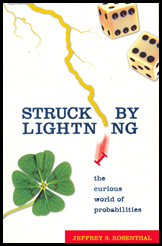
Struck by Lightning : Review

image

The author urges the reader to develop a “probabilistic perspective” towards many aspects that one comes across in life. Rational thought about randomness is far better than irrational emotional responses. Whenever we see things being reported, coincidences being sighted, it is better to start off by understanding the question “how unlikely is the event?”. One needs to figure ,” Out of How many ? question to answer the likelihood of the event . For example, the famous 6 degrees of separation that is often quoted, sounds pretty reasonable once you do a back of the envelope calculation.

ODE (Tenenbaum + Pollard) - Review

image

The book is about 800 pages long.It is a classic reference to solve ODEs and thus contains almost all the tricks of the trade to solve an ODE, be it analytically or numerically.  The good thing about the book is that various methods are presented in the form of a “lesson-exercise-solution” format. Each lesson has good enough examples to give a clear idea of the technique used to solve the ODE. Another interesting feature of the book is that it is interlaced with chapters that describe various setups that generate ODEs. So, in one sense the reader can see everything in one place, i.e., the various kinds of settings that generate ODEs and the methods to solve the ODEs. I happened to go over this book mainly as I was stuck with an ODE that I did not want to solve it numerically. I went through a section of this book to figure out an analytical solution. I liked the style of the specific section so much that I ended up reading almost the entire book. Well, it is a reference and it needs to be used whenever you are in need. But I went through the book just to refresh all the ODE methods that were lying dormant in my memory.After going through this magnum opus on ODE, I am kind of exhausted and plan to stay away from differential equations at least for sometime.

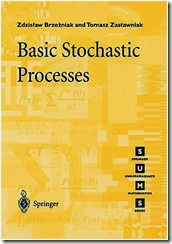
Basic Stochastic Processes : Review

image

This book is one of the few books on stochastic processes that teach concepts via problems. Teaching math concepts via problems with out delving too much in to the theory has its own advantages. The fact that the book is asking you to prove/compute/calculate/verify something at regular intervals means that you are not a passive reader from the word “go”. In fact one cannot be a passive reader at least while going over a math book. But this approach of “using problems” to teach various concepts is extremely appealing for people who are looking for self-study texts. There is a whole section on Markov chains where a few definitions theorems are interlaced between what is largely a set of interesting exercises that guide the reader to understand discrete and continuous Markov processes. The interesting thing about this book is that, even though the title seems to communicate that it is a “learn by doing” book, the math for all the proofs, lemma and propositions are quite rigorous. There are a few places where the author refers the reader to other books, but by and large it is a self-contained text.

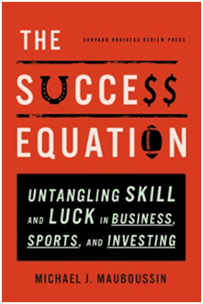
The Success Equation : Review

image

The title of the book gives away the main idea behind the book, i.e., ways to separate skill and luck in any outcome. Take any field, be it sports, investing, business , etc. all we get to see is the outcome. In games like chess, the outcome is clearly attributed to player’s “Skill” and in games like slot-machines / casino games, the outcome is clearly attributed to “Luck”. However there are a lot of activities that fall somewhere in between this Luck-Skill continuum. The book tries to answer the following questions :

Cartoons 2.0

Via Intelligent Life

In Hollywood terms, it’s daring to devote even six minutes of animation to adults, rather than their offspring, but, judging by the acclaim that’s being heaped on “Paperman”, the gamble has paid off. The question is, then, when will someone produce an entire feature-length cartoon with an adult audience in mind?

The Problem of HFT : Review

image

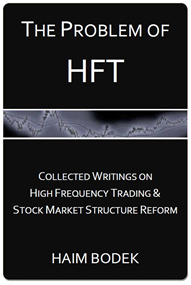
Haim Bodek, the quant trader who was featured in the book “The Dark Pools” has written a book on what he thinks is the main problem with HFT. This content is more like a collection of articles and blog posts packaged as a book. Despite such a structure, the author focuses on ONE issue through out,i.e., “Special order types”,  that he claims as the single most important demon behind HFT dominance.

This is Water ! This is Water !

image

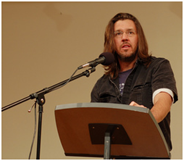
(This is the commencement address David Foster Wallace gave to the graduates of Kenyon College in 2005. It captures his electric mind, and also his humility–the way he elevated and made meaningful, beautiful, many of the lonely thoughts that rattle around in our heads. The way he put better thoughts in our heads, too. )

(If anybody feels like perspiring [cough], I’d advise you to go ahead, because I’m sure going to. In fact I’m gonna [mumbles while pulling up his gown and taking out a handkerchief from his pocket].) Greetings [“parents”?] and congratulations to Kenyon’s graduating class of 2005. There are these two young fish swimming along and they happen to meet an older fish swimming the other way, who nods at them and says “Morning, boys. How’s the water?” And the two young fish swim on for a bit, and then eventually one of them looks over at the other and goes “What the hell is water?”

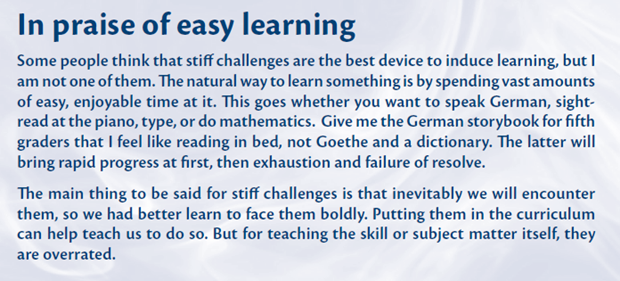
Elementary Stochastic Calculus : Review

image

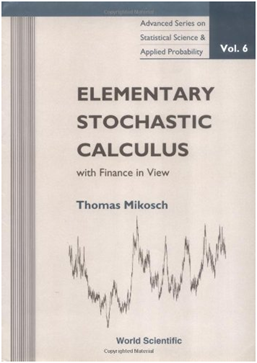
This book introduces stochastic calculus in a very intuitive sense not burdening the reader with heavy math from measure theory and functional analysis. The author in the preface says that the reader is deemed to have passed an examination based on the book if he/she can understand the derivation of Black-Scholes that is present in the last chapter of the book. If you pick up any standard text book that proves Black-Scholes , one needs to go through a ton of math before understanding Ito’s lemma that is one of the major tools in deriving the price of a call options. So, the author’s ambitious objective (as stated in the preface) is that the book should teach Ito’s lemma to anyone with a basic understanding of probability and calculus. Does he meet the objective ? Well, you got to poll a large group of readers to get a fair estimate to that question. My opinion is that the author has done a fantastic job of showing the appropriate concepts and tools that one needs to get a hang of, before understanding Black-Scholes PDE. How does the author mange it?

A First Look at Rigorous Probability Theory : Review

image

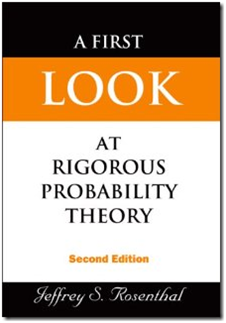
This book has been one of the MOST challenging books to work through. I had tried going through this book many times in the past but could not get past the first 10 pages of the book.  The very first concept that is mentioned in the book is the extension of measure from  a semi-algebra to a sigma algebra. The proof was just beyond me for the simple reason that my fundamentals were shaky. Not wanting to give up, I had to look for an alternative path to this book.  My alternate path was to work through some of the basic fundamentals of real analysis, read around the subject , read about the historical developments behind Lebesue measure and integral, understand Lebesgue integration from a non-measure theoretical perspective,etc. I realize that I have read about dozen books in order to work through this book. Here is the list of 12 books that have helped me:

Automate this : Review

image

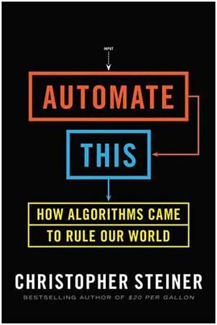
The author starts off his book using the example of flash crash and an e-bay bidding algo wreaking havoc. He cites these examples as an indication of the extent to which multiple algos dedicated to ONE single task, i.e.bots, are being used in various domains. Obviously the start of algos and heightened excitement for it came from Wall Street. But the author tries to give a journalistic account of all the various places where bots are being used. This book is a light read. It gives examples of interesting people who are using bots to do things that were unthinkable a few years ago, thanks to the super cheap computing power and the ignition( word borrowed from Talent code) given by popular wall street quants, Page&Brin’s and Zuckerbergs of the world.

Un-Freakonomics

Via Forbes

Alvin Roth sees plenty of ways economics can make a difference in people’s lives. In contrast with the authors of bestselling books like Freakonomics, who are fascinated by obscure but intriguing questions like how to detect cheating by sumo wrestlers, Roth relishes real-world challenges. “Some say economics has all kinds of good tools and techniques, but it has an absence of interesting problems,” notes Roth, 58, who holds a joint appointment in the Harvard economics department and the business school. “I look around the world, and I see all kinds of interesting, important problems we ought to solve with the tools we have.”

An Introduction to Laplace Transforms and Fourier Series : Review

image

Laplace Transformation is a useful tool in problem solving. From the probabilistic theory perspective, Moment generating function is nothing but a linear combination of two Laplace transforms. In fact moment generating function has a more direct relationship with Laplace-Stieltjes transform. Most of the calculations involving MGF and convolutions become easy with the use of Laplace Transform.   I think one of the most powerful ways to use Laplace transforms is solving Partial Differential equations.  Having the basic Laplace transforms and Inverse Laplace transforms at your fingertips is good for solving Toy PDEs. But in real life, most of the Inverse Laplace transformations have no closed form solutions. They have to be solved numerically. Coding up an Inverse Laplace transform in whatever language you are comfortable is a nice learning experience. My Laplace transform fundas were rusty, so decided to go over this book quickly.  The author P.P.G Dyke, being an applied mathematician, makes the book interesting by giving a range of problem domains where Laplace and Fourier transforms can be used. This book is ideal for those who want a quick recap of Laplace and Fourier transforms.

Annapurna Devi – An Unheard Melody : Review

image

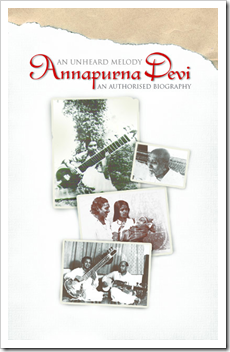
Little is known about Annapurna Devi in the media and amongst sitar lovers. Some people know her as the wife of the Pt. Ravi Shankar, some  know her as an expert in Surbahar ( an instrument that is technically superior to Sitar) , some know her as a recipient of Padma Bhushan award. However nothing much is known about her personal life except that her marriage with Ravi Shankar was a disaster. Annapurna Devi has chosen to make herself almost inaccessible. She has stopped performing in public / stopped giving concerts, stopped recording her music. She has shunned public life to an extent that she hardly steps out of her house. She does not welcome any visitors. She teaches sitar and music to a selected few. In a sense, she has almost no contact with the outside world.

Cashier Number 3 Please : Review

image

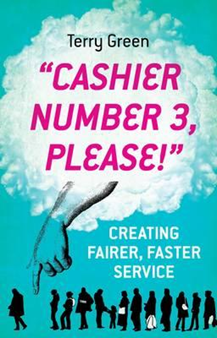
Reading this book was like revisiting an old services marketing course. This book is written by Terry Green, a guy who has been in to Queue management  business for over 20 years. So, it is more a practitioner’s book written to help supermarket chains, banks, or any establishment that deals with customers who form a Queue to get serviced. This book does not have a single mathematical formula but intuitively covers many aspects of the math behind Queueing.

Practice Perfect : Review

image_thumb3

clip_image002_thumb [clip_image003_thumb[clip_image004_thumb

The authors of this book run “Uncommon Schools”, a network of 32 charter public schools across Massachusetts, New Jersey, and New York. The first author, Doug Lemov , is also known for his earlier book, “Teach Like A Champion” that is exclusively geared towards teachers to improve their effectiveness. This book is also, in a way, aimed at teachers, educators, etc. though  the authors suggest that some of the techniques are more general in nature that can be be applicable to any field.

Quote for the day

Every time I read a good novel (currently Anna Karenina), it astonishes me to see to what extent getting wrapped up in fictional characters seems to lend a purpose to life. There are some pleasures that can come from many sources, but in my life the pleasure of feeling part of a group — which is what makes life seem to have a meaning — comes from exactly two: close friends, and good books. In the absence of the former, the latter is an alarmingly good substitute.

Mumbai Local & Waiting Times

“Waiting time” results are often paradoxical and counter intuitive. To illustrate using a simple example, here is the advertised schedule of train departures from of a Mumbai Local from Churchgate to Borivalli over a  a 24 hour timeframe.

The average inter-departure time between the trains appears to be ~ 6min from the graph on the right. However since it is a discrete distribution, one can easily compute the exact value by taking a weighted average. In this case, it is 5.6 min.

PostSecret

image

In Nov 2004, Frank Warren printed 3000 postcards inviting people to share their secret.

image

He handed over these postcards at subway stations, art galleries, slipped them in between pages of library books. As the word spread, people were making up their own postcards and mailing them to Frank . As of today he has over half a million postcards from strangers all over the world.This book is an assorted collection of secrets from his vast database. Each postcard has a untold story behind it. The post cards evoke a gamut of feelings :  sad, shock, dismay, thought-provoking, disgusting at times, funny ….

Quote for the day

Well, another box is suggested by the maxim better to fail quickly than to fail slowly which I’m attributing to venture capitalists but also applies in everyday life. Better to have a marriage fail after 7 months rather than 7 years; better to decide you don’t really want to do a Ph.D. after 7 months rather than 7 years. Actions that turn slow-failure outcomes into fast-failure outcomes may be better; you can stop what you’re doing and try something completely different, outside the context of the model.

Snakes & Ladders revisited

Snakes & Ladders is one of the popular board games. Just for fun, I have tried revisiting this game from a math perspective.

There are many variations of the game where each variation differs from the other in terms of the position of ladders and snakes. I picked this specific version from this wiki

image

Blurb from Wikipedia

Snakes and Ladders (or Chutes and Ladders) is an ancient Indian board game regarded today as a worldwide classic. It is played between two or more players on a game board having numbered, gridded squares. A number of “ladders” and “snakes” (or “chutes”) are pictured on the board, each connecting two specific board squares. The object of the game is to navigate one’s game piece from the start (bottom square) to the finish (top square), helped or hindered by ladders and snakes, respectively. The historic version had root in morality lessons, where a player’s progression up the board represented a life journey complicated by virtues (ladders) and vices (snakes).

Glowing Review

image

A glowing review of the book, “The Theory That Would Not Die”, by Christian Robert in current issue of Chance :

A few days ago, prior to reading her book and writing this review, I had lunch with the author of The Theory That Would Not Die, Sharon McGrayne, in a Parisian café. We had a wonderful chat about why she wrote the book and about the people she met during its completion. Among others, she mentioned the considerable support provided by Dennis Lindley, Persi Diaconis, and Bernard Bru. This conversation also acted as an introduction to the interview on Page 24. (I had not fully read the book before because of delays in the delivery, presumably linked to Yale University Press not correctly forecasting the phenomenal success of the book and scaling the reprints accordingly.)