Watching this play is a terrible waste of time. I don’t really understand why such plays are made in the first place. One expects something different from a play as compared to a movie. There are 4 artists in the play who try to put on an accent while speaking , forget dialogues in between, murmur something amongst themselves, talk in an accent that is extremely difficult to follow, and end up enacting a story with no meaning whatsoever. Each artist is a spectacular disaster and logically the play is a disaster too. Have developed a strong aversion towards seeing any more plays for now.
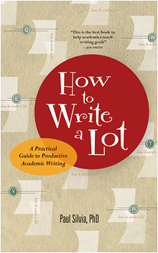
The title is a marketing ploy so that someone struggling to write, be it a graduate student. a researcher or a professor , buys the book thinking that they will get some magical advice from it. The author himself admits this towards the end of the book that the title is not exactly what the book is all about. He says the actual title should have been, “How To Write More Productively During the Normal Work week with Less Anxiety and Guilt ?”.
Its been quite a while since I have read any magazine. In fact I have stopped reading magazines for no reason. Thought I will resume this activity and at least read a couple of them on a regular basis.
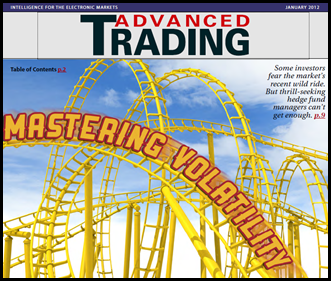
Jan-2012 issue of Advanced Trading covers the following aspects:
Risk Management Takes Center Stage After MF Global Collapse
Broker dealers who have prop desks are posing a big problem on Wall Street.
Any book that promises a journey spanning 300 years is bound to focus on events that / people who made the maximum impact for the development of option pricing formula. If one were to pause and think about the option pricing formula, one would come up with questions like
Pretty naïve question to start with, Why is there a need for options, in the first place? How were the traded historically? Were they precursor to some other instruments?
An average trade on the National Stock Exchange, the country’s premier stock exchange, was worth a little over Rs 30,000 in 2007-08. That is now down to Rs 20,000, a drop of around 30 per cent in a little over three-and-a-half years. The trade value has been declining consistently with the calendar year 2011 registering a 15 per cent fall compared with 2010. While some of this decline may be explained by a fall in stock prices, a section of the stock market attributes it also to the increased use of automated or ‘algorithmic’ trading by investors**.**
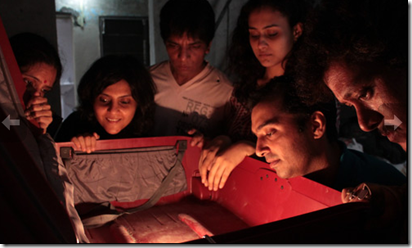
Had a chance to watch a very interesting play called ”Let’s Unpack”, conceived and directed by Meenal Kapoor. Firstly the play is script less. So, in one sense each show is an original and can never be seen again in its entirety. It is delight to watch things shaping impromptu on a stage.
What’s the play about ?
A group of 6 people attend a workshop in which they are bound to stay together for 15 days in complete isolation from the outside world. All that they get is a newspaper, television, gym, a garden, and some personal items that they can carry. There are no rules in this house except that they are pulled into bizarre assignments, intriguing tasks, weird games and complex discussions that force them to peep inside themselves, question their own perspectives and shake hands with their instincts.When they come out of that room nothing outside has changed. But they all have.
Recently, I saw a play called “Baghdad Wedding
” by Hassan Abdulrazzak and liked it a LOT. The play is about three characters, Salim, Luma and Marwan. The play begins in a setting at Imperial College London where the three meet each other at a party. Hailing from a common place Baghdad , they become best buddies. Luma is a post-modern girl and holds values that are nowhere close to a conservative Baghdad girl. Marwan is the typical conservative guy who is at Imperial college to do this engineering. Salim is the most rebellious of the lot and spends his time writing novels with extremely controversial titles, that a Muslim would never dare to write. Fate brings all of them to Baghdad and the play shows how people change. The place, the environment, the situations, the context makes each of these characters , transform completely by the end of the play. Luma starts wearing hijab and becomes a dedicated doctor helping fellow Iraqis, Salim starts believing in Quran because of the strange turn of events before his wedding ceremony. Both Salim and Luma decide to settle down in Iraq Marwan , the most conservative of the lot @ the beginning of the play, actually leaves Baghdad to the safety environs of UK.
Like all the bubbles that eventually become unsustainable and burst, I-banking as a profession has also become a bubble. As they say, when everyone recommends buying a stock, one can be pretty certain that the stock is going to tank. Similarly when everyone thinks the best and most sought after job is being I-banker, it is likely that it is going to suck/ disappear soon. A whole host of people have lined up to become i-bankers in the recent decade. My guess is, it is the glamour and money that has made the profession attractive. A question like “Would you do , what you are doing, if no one paid you ?” would be totally meaningless question for most of the people working in this profession.
This book is written by Normal Matloff , a professor who has worked both in the Computer science department and Statistics department at UCLA. Hence this book is markedly different from the books that are available on R. You get a nice blend of views about R. Also the author clearly states in his preface that this book is essentially a book for those “who want to develop software in R”.
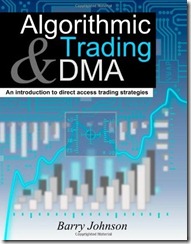
This book by Barry Johnson clarifies a lot of terms that we get to hear in the context of trading using computers( program trading , DMA, algorithmic trading, high frequency trading, systematic trading, statistical arbitrage, quantitative trading ). Most of the times, the articles / papers / academic literature don’t make an attempt to clarify what these terms are. So, the reader is left to imagine whatever is convenient to him/her based on the context of the material.
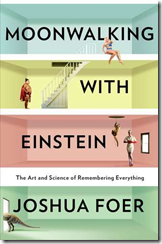
“Moonwalking with Einstein” is a book recounting the experiences of US Memory Championship winner Joshua Foer, whose day job is NY Times journalist. The book is easy on eyes and can be read in a few hours time. One might shy away from books that deal with memory assuming they are of “self-help” type books . But that’s not the case with this book. This book is a result of curious journalist who happens to cover National and International Memory championships for a couple of times and starts wondering about the participants. He starts pondering over a few questions:
The problem is that coding isn’t fun if all you can do is call things out of a library, if you can’t write the library yourself. If the job of coding is just to be finding the right combination of parameters, that does fairly obvious things, then who’d want to go into that as a career ?
Nasdaq OMX announced on Monday it has acquired the machine-readable news company RapiData, getting Nasdaq into the business of providing trading firms and financial institutions with the latest government and economic news.
RapiData delivers economic indictors directly to market participants as soon as the data becomes available so firms can incorporate macroeconomic news into their trading strategies. Brian Hyndman, senior vice president for Nasdaq OMX global data products, said RapiData’s offerings would be a welcome addition to Nasdaq’s existing lineup of data products and services. Hyndman added that while the delivery speed of RapiData is currently comparable to that of competitors, Nasdaq plans to use its own resources to improve data speeds.
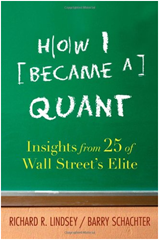
The purpose of this post is to summarize the various stories mentioned in this book. This write up is a result of a marathon writing on this weekend. Actually it took more time to write than read the entire book!. In the process of summarizing, I have tried listing down some of the statements/remarks/suggestions(under the heading, learning’s) made by these quants that are worth pondering upon.
Nowadays I start most of my work with a .Rnw document that I convert later in to a LaTeX file. Since .Rnw keeps a running log of the trials / mistakes encountered in a project, it serves as a good summary document of the time spent on data analysis , model building , visualization , back testing etc. One big limitation that I was facing in preparing .Rnw documents was that I had forgotten most of the LaTeX syntax that I had used 4 years back. I somehow got by till date by knowing only a handful LaTeX commands. But my “memory” never fails to embarrass me!..and so had to go over LaTeX syntax.
It’s a small world. I was talking to one of my colleagues about Kathalaya
and he mentioned that his sister had attended some workshop at Kathalaya. At the same time, he mentioned about another NGO that badly needed a web presence. So, I just took some time out this week and designed a preliminary site for the NGO.
The NGO goes by the name North Bengal Council for the Disabled ( NBCD) and Prerana is one such initiative under NBCD. They run a school for the blind at Siliguri, near Calcutta. Made a basic version of the website and I hope to change the design after 10-12 months of web presence. These 10-12 months would also help the NGO put in appropriate content/videos/images for the relevant pages.
Unaggressive bets have led Aditya Puri’s bank to 10 years of 30 percent profit gains
Aditya Puri avoids e-mail, doesn’t carry a mobile phone or wear a watch, and goes home for lunch most days. That hasn’t stopped his HDFC Bank (HDB
) from becoming the country’s second-biggest lender by market value, after government-owned State Bank of India. “Banking is a simple business,” says Puri, 61, in an interview in his sparsely decorated office at the bank’s Mumbai headquarters, sunlight streaming onto the bare tiled floors. “You be too aggressive, it will come back and bite you on your backside.”
Fresh in my mind are the various images/opinions/numbers/people from the book, “Boomerang
Here is an article that I stumbled upon, that says EU’s collapse is imminent.
Via CBS News :
With Italy sinking rapidly into financial chaos, the eurozone’s 17 finance ministers scrambled Tuesday to find enough money to give their rescue fund a veneer of credibility and world markets some reason to believe their embattled currency won’t break up.
Italy’s borrowing rates shot up above 7 percent Tuesday, an unsustainable level that already has forced three smaller EU nations to seek bailouts. Markets rose for the second day on hopes that the enormous pressures on the ministers would produce some results.
This book introduced me to a new term, ‘disaster tourism’
. People who visit places where financial disasters occur. Michael Lewis goes on one such tour to Iceland, Greece, Ireland and Germany. This book recounts his experiences of the visits and in turn gives a reader some idea of “What the hell is going on in these countries that is causing stock markets to gyrate wildly, investors to panic and making world leaders increasingly edgy?”
Books such as ”Brain Rules” are basically meant to be a bridge to understanding some very basic things. A layperson like me does not know much about the brain. I have completely forgotten whatever I have learnt in high school about the anatomy of brain . So, why read this book ? In fact why should anyone read this book? Most of our survival in modern day world depends on our brains. So, a little knowledge about it might help us in performing better and probably living better too. The author states in his preface that the rules that he talks about in the book are a collection of ideas that he wants others to explore in the field of education, business, entertainment, marketing and in general , every aspect of our lives.
Stumbled on to a fantastic service called datamarket
.
One can sign up for free and get up to 100 Million data sets for data exploration.
All you need is the url of the dataset to import data in to your programming environment. This service will be tremendously useful when you are learning visualization techniques.
Gone are the days when you had to struggle to get time series data. Kudos to the datamarket
team
From a childhood in Colombia, to a life in the States, Janet Lustgarten’s personal motto might as well be “no guts, no glory.”
Lustgarten’s father was a men’s suit manufacturer in Colombia when new political pressures brought change to business and the way factories were run. “It was a difficult time,” she recalled, “and my family thought we’d live a better life in the United States and moved to Florida. We were the classic family coming to America looking for security and opportunity”
Andrew B. Weisman on MVO(Mean Variance Optimization);
The use of this technique, in combination with the informationless performance-enhancement techniques that are frequently employed (knowingly or unknowingly) by professional investors, tends to produce portfolios that are optimized to produce maximal future period losses; systematically denigrated from a liquidity standpoint; and actively inclusive of managers that make use of money management strategies that imply catastrophic losses of capital. It is my firm belief that unless Harry Markowitz had a truly ironic sense of humor, this was not his intent. Since this time, savvy investors have begun to employ several compensating techniques in order to accommodate the peculiarities of hedge fund data, including conditional value at risk (CVaR) in recognition of the distinctly nonsymmetric, left tail-skewed, reality of hedge fund investing, resampled optimization in recognition of the frailties of error estimation and the fact that life is,sadly, out of sample
For majority, writing something means firing up a word document( MS Office or Open Office) and typing in stuff. Sometimes we don’t pause and think about the way we are actually preparing the document. We write something, we format it using the menu items or hot keys, then we write something, then we format etc. This goes on until we are done with preparing the document. This process is virtually in an auto-pilot mode for most of us. But if we pause and think of it, Should composition and formatting be activities that should done in parallel ? At least I don’t remember writing anything beyond 100-150 words before using some typesetting stuff like changing the font, color,etc. Does my composition become efficient if I don’t club these activities ? Don’t know!
This book helps one “get up to speed“ with git. With github being the goto repository-master for most of the R projects out there, it has become imperative for any R programmer to have a decent knowledge of git and the know about ways to interact with github. As of today github has 1.1 million programmers hosting close to 3.2 Million repositories. This has surpassed sourceforge long back. So, an R programmer cannot be ignorant of this distributed version control system. Personally I found it a stretch to have a version control system. But once I started using it for a few projects along with ProjectTemplate directory structure , I found that it helped me in carrying out analysis in a better way. So, how do you go about using it? Well, there are many plug-ins to get going on git. Before you start using the plugin, you need to get the vocabulary of git.
I stumbled upon a very interesting write-up that captures the necessary software needed for managing one’s projects. The paper
is written by Kieran Healy of Duke University. The takeaways from the paper are as follows :
Three principles of work flow :
Keep a coherent record of actions. Instead of doing a bit of statistical work and then just keeping the resulting table of results or graphic that you produced, for instance, write down what you did as a documented piece of code. Rather than figuring out but not recording a solution to a problem you might have again, write down the answer as an explicit procedure
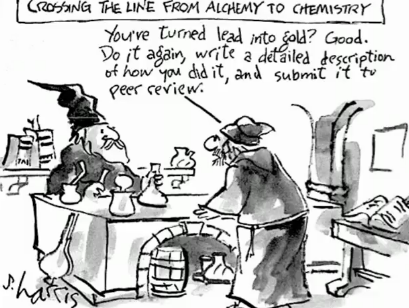
All models are analogies, and being analogies, they are limited in their scope. In physics you can describe ice, water and steam, and the phase transitions between them, with one unified theory, amazingly, and hence you can handle the extremes of freezing and boiling.
In finance or economics we have nothing like that. Even beautiful Black-Scholes-Merton ignores volatility variations, illiquidity, panic, government regulations on shorting, to name just a few things that lie outside it.
Being a Full Professor has a lot to be said for it. You are a duke or duchess in the medieval institution of the university. You receive a good salary, as big and nice an office as your department has available, first choice of class hours, and a lot of nice other perks. And there is also the wisdom and balanced judgment that comes with age. For example, I remember when I was an assistant professor, it seemed absurdly unfair that Full Professors, in addition to receiving a better salary, also received nicer offices and other perks. But now that I’ve got that wisdom and balanced judgment that comes with age, it all seems perfectly reasonable.
I have always wanted to write Python code for cleansing real time data. Now that I have at least a working knowledge of R, I hope the transition from R to python would be a little easier as there are a lot of similarities between them.
Drew Conway from NYU gives a brief 20 min. talk on the similarities and differences between R and Python.
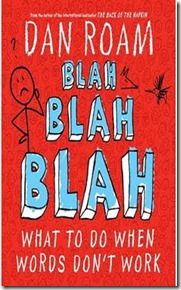
Dan Roam, the author of popular books “The Back of the Napkin
” and “Unfolding the Napkin
”, has written a new book with a message that one must fuse our linear wordy based thought process with pictures/images/visuals to comprehend things in a better way. Well, this message is not something new. Presentations with visuals catch our attention rather than the boring bullet point slides. To some extent my book summaries might also be boring as they are merely words, although I try to put in some visuals to make it interesting.
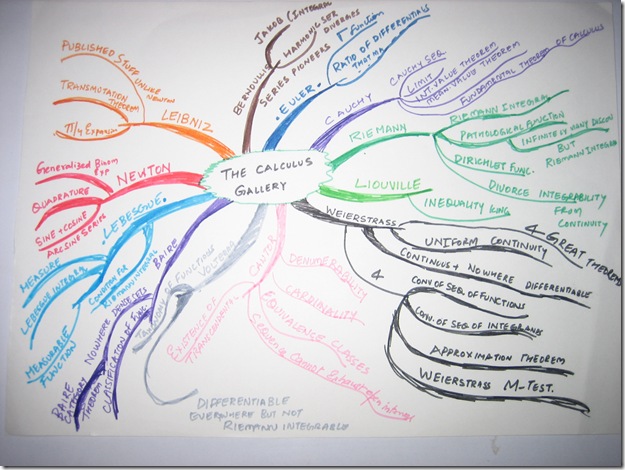
I was going over some old folders when I stumbled on to this mind map of the book “Calculus Gallery
”. Indeed, a picture is worth a thousand blah blah blahs.
Yesterday was a rather unpleasant day for me. Whenever I am in a bad mood / I become restless I pick up this book by Anne D LeClaire, titled, “ Listening below the noise”. For some reason this book has been my best companion over the past few years. I reread parts of this book from time to time. This time around, I thought I should blog about this and write a few words about the book.
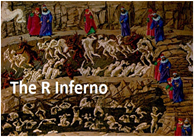
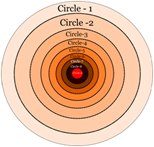
The author of “R Inferno”, Patrick Burns, starts off by saying, “If you are using R and you think you’re in hell, this is a map for you”. Well, this fantastic book needs to be read by any R programmer, irrespective of whether he thinks he is in hell or not. The metaphor used in this book is that of journey through concentric circles, each circle representing people (programmers) who are suffering in pain because of “violating the proper programming conduct”. Using this metaphor, the author makes an amazing list of items that one need to keep in mind while programming in R. There is a good discussion on each of the items too. My intent of this post is to merely list down the main points of this book.
Murakami sold his jazz club in order to devote himself, full time, to writing.
“Full time,” for Murakami, means something different from what it does for most people. For 30 years now, he has lived a monkishly regimented life, each facet of which has been precisely engineered to help him produce his work. He runs or swims long distances almost every day, eats a healthful diet, goes to bed around 9 p.m. and wakes up, without an alarm, around 4 a.m. — at which point he goes straight to his desk for five to six hours of concentrated writing. (Sometimes he wakes up as early as 2.) He thinks of his office, he told me, as a place of confinement — “but voluntary confinement, happy confinement.”
I tend to read books from the Fabozzi factory
, not to get mathematical rigor in a subject but to get an intuitive understanding of the stuff. Overtime, this approach has helped me managed my expectations from Fabozzi books. Having never worked on Black-Litterman model till date, I wanted to get some intuition behind the model. With that mindset, I went through the book. The book is divided into four parts**. Part I** covers classical portfolio theory and its modern extensions. Part II introduces traditional and modern frameworks for robust estimation of returns. Part III provides readers with the necessary background for handling the optimization part of portfolio management. Part IV focuses on applications of the robust estimation and optimization methods described in the previous parts, and outlines recent trends and new directions in robust portfolio management and in the investment management industry in general. The structure of the book is pretty logical. Starting off with the basic principles of modern portfolio management, one moves on to understanding estimation process, and then understanding the optimization process and finally exploring new directions.
Stumbled on to Dewarists! Brilliantly conceptualized and executed!
The Dewarists is a new original series. Part music documentary and part travelogue, the show features inspiring musicians collaborating to create original music while traveling to locations across India.Set against the frenetic pace of the city of Mumbai, Episode 2 features a cross-border collaboration between Pakistani singer-songwriter duo Zeb & Haniya, and two veterans of Bollywood – composer Shantanu Moitra, and lyricist Swanand Kirkire.
Gibbs Sampling is an important method in the context of Bayesian estimation. There are other books on R that focus on Bayesian Simulation (Jim Albert), Monte Carlo simulation (Robert and Casella) that are very good and little advanced. So, where does this book fit in? If one has never done any kind of simulation in R, this book is the ideal reference. For someone who is already aware of the basic simulation stuff, there are 3 chapters in the book that talk about Markov Chain, Bayesian Estimation and Gibbs Sampler that are worth going over. I will try to summarize the main points of the book.
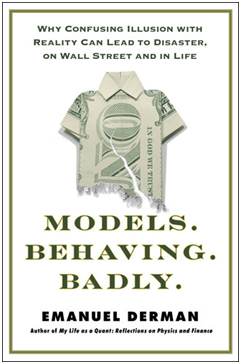
Emanuel Derman’s book, “Models.Behaving.Badly”, gives a physicist and quant’s perspective of models Vs theories, their nature, what to expect of them, how to differentiate between them and how to cope with their inadequacies. Derman starts off by citing a few incidents from his childhood in Africa, where political models, social movement models failed badly. He then talks about the need to understand the crucial difference between theories and models, thus providing the necessary motivation for a reader to go over the book. The book is not as much as describing the precise faulty nature of all the financial models, which would be quite a stretch that it would not fit in a single book. The book is more about the kind of basic things that a financial modeler must always keep in mind and remain humble in his pursuit, always remembering that his model will always say “what something is like?”. It will never be able to answer “what something is”. Let me summarize the main chapters of this book.

 [
[

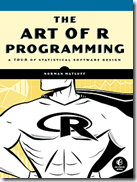 This book is written by Normal Matloff , a professor who has worked both in the Computer science department and Statistics department at UCLA. Hence this book is markedly different from the books that are available on R. You get a nice blend of views about R. Also the author clearly states in his preface that this book is essentially a book for those “who want to develop software in R”.
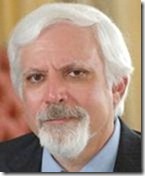 David Leinweber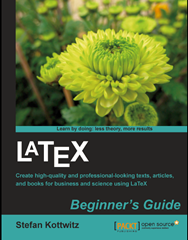
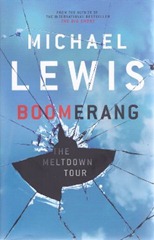
 . People who visit places where financial disasters occur. Michael Lewis goes on one such tour to Iceland, Greece, Ireland and Germany. This book recounts his experiences of the visits and in turn gives a reader some idea of “What the hell is going on in these countries that is causing stock markets to gyrate wildly, investors to panic and making world leaders increasingly edgy?”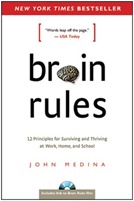



 :
:

 [
[

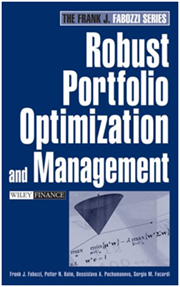
 , not to get mathematical rigor in a subject but to get an intuitive understanding of the stuff. Overtime, this approach has helped me managed my expectations from Fabozzi books. Having never worked on Black-Litterman model till date, I wanted to get some intuition behind the model. With that mindset, I went through the book. The book is divided into four parts**. Part I** covers classical portfolio theory and its modern extensions. Part II introduces traditional and modern frameworks for robust estimation of returns. Part III provides readers with the necessary background for handling the optimization part of portfolio management. Part IV focuses on applications of the robust estimation and optimization methods described in the previous parts, and outlines recent trends and new directions in robust portfolio management and in the investment management industry in general. The structure of the book is pretty logical. Starting off with the basic principles of modern portfolio management, one moves on to understanding estimation process, and then understanding the optimization process and finally exploring new directions.