Picturing the Uncertain World : Summary

image

The book’s intro caught my attention which said “ This book contains stories that provide real life lessons on understanding and managing uncertainty”.  That statement was good enough to motivator to read through the 21 short stories about uncertainty

The book starts off by describing the sample variance equation as the most dangerous equation, dangerous because of its profound misuse. Well, any elementary stats book tells that sample standard deviation is inversely proportional to square root of sample size. The author talks about various situations where a misunderstanding of this simple rule caused tremendous losses.

Quote for the day

The cost of computing has dropped exponentially ,

but the cost of thinking is what it always was. 

That is why we see so many articles with regressions and so little thought.

- Jacques Mairesse

Do scientists really need a PhD

An article from Nature,”Do Scientists really need a PhD” ?  talks about BGI in Shenzen, a research center where almost no one has a PhD . Can they churn out cool stuff ? I think they will.

Ken Robinson says in his TED talk that there is an academic inflation all around us. For jobs that require BA, you need to have an MA. For jobs that need an MA, you need to have a Phd and so on… So Very True! World has given too much importance to degrees where actually what matters is , the attitude towards work and how much you care about what you do ?

How to Make an American Job Before It's Too Late

Wonderful Piece by Andy Grove :

image
Recently an acquaintance at the next table in a Palo Alto, California, restaurant introduced me to his companions: three young venture capitalists from China. They explained, with visible excitement, that they were touring promising companies in Silicon Valley. I’ve lived in the Valley a long time, and usually when I see how the region has become such a draw for global investments, I feel a little proud.

Untangling Skill and Luck

Here is an interesting peace by Michael Mauboussin @ Legg Mason.

Takeaways :

  • Two main ways to assess skill and luck are

    • Analysis of Persistence of Performance

    • Reversion to the mean

      • Skill as a measure of persistence

      • Rate of reversion as a measure of Luck

      • Analogy of Change and No Change is a nice point where Change happens in the type of winners seen and No Change happens in the variation of performances.

Upside of Irrationality

Dan Ariely in his book talk  : 

We have an intuitive idea of stuff and we continue to work under the “spell” of our intuitions. But it is wise , despite our internal resistance, to check our intuitions from time to time. Collect data , Do a Survey , Simulate stuff , etc to empirically test your intuition and you will be amazed at the numerous ill conceived intuitions that we keep holding on to.

Copula methods in Finance : Summary

image

The book begins by giving a very quick overview of derivatives pricing, stochastic vol models, risk neutral pricing and ends the first chapter by giving couple of motivating examples where loosely coupled joined distributions given marginals , are used to price options .

Chapter 2: Bivariate Copulas

image

Copula is a type of function . But a very special function which maps marginals to joint. Hence one needs to be aware about the nature of the function and also its limitations. In that sense, this chapter develops copula function from scratch by explaining in detail the various conditions for a function to be called a copula. Boundary conditions of a generic copula are introduced using Frechet bounds. The good thing about this book is that it tries to give a real life application at the right stages of the book so that a reader can immediately relate the concept. For example the Frechet bounds are technically introduced in most of the books(Nelson). However the authors in this book cite an example of an exotic option where Frechet bounds are used to calculate the minimum and maximum value of the option. Various types of copulae are introduced such as subcopula, minimum copula, maximum copula, product copula, Survival copula, Joint Survival copula for uniform variates etc. The highlight of this chapter is explain Sklar’s theorem in a detailed manner.

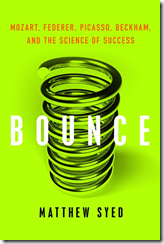
Bounce : Summary

image

This is the latest addition to the talent myth pop-science literature. The ones that have already been published are Malcolm Gladwell’s OutliersDaniel Coyle’s Talent Code and Geoff Colvin’s Talent is overrated. Well, the academic research behind all these books is Dr.Ericsson’s revolutionary research on deliberate practice. 

Bounce is written by Matthew Syed , a columnist for the Times of London and a BBC Commentator. More importantly, he is a three time commonwealth table tennis champion , a two-time Olympian.  Stuff from a sportsman is something one can always read as it is a story told by someone who actually was in the trenches and can tell a better story I think , than a mere spectator. Its debatable point though whether narrative is better from a sportsman or a bystander. I tend to think the former is better.Anyways, coming back to this book, it has three parts. 

Purpose

Via Within the Frame(David duChemin)

VARANASI, INDIA. Varanasi is one of the holiest cities in India. It sits on the banks of the river Ganges, a holy river choked with pollution, decay, the remains of the dead, and the rotting offerings of marigolds placed in the river every morning and night by the faithful. Along her banks run the ghats, stone steps that descend into the
river and form the meeting place between the Ganga and her devotees. It is a chaotic, noisy, colorful place crowded with people who come to pray, wash, sell, buy, teach, and be taught. It is all at once a beautiful and an ugly place, a place of serenity and cacophony. I spent my time in Varanasi walking up and down the ghats at all
hours. Early morning, late evening, high noon. Trying to get a feel for the place, and to get an image or two that summed up not only the spirit of the place but how my spirit felt and thought about the place. And then I saw this boy. He was leaping from one boat to another, as a paper kite fell from the sky (the sky was full of them). He was trying to gauge the trajectory of the kite, to catch it.

Urbanization

Via Sanjiv Sir :  India’s Coming Urbanization Phase

Some relevant numbers to get an estimate of the Urbanization that is predicated to happen in a big way:

  • We think on very conservative estimates about 380 million people are going to be added to India’s urban spaces over the next few decades. So that’s more than the entire population of the U.S. moving into urban India.
  • Close to 60% of our GDP is composed of private final consumption expenditures
  • India relative to the rest of the BRICs we are at about just over $1,000 [of income annually] per head. We are less than half of the next highest BRIC [economy], which is China.

Sturges Rule & Scott Rule

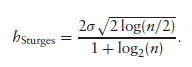
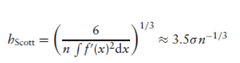
I have always wondered about the binning criterion in histogram, a basic tool that is used widely by any data analyst . By default, in most of the software available, Sturges’ Rule and Scott Rule are provided which say the following ,the bin width chosen should be

image

image 

There must be a derivation in some book but I had never bothered to look it up , until last week , when I had to for some reason.

Quote for the day

Geet Sethi :

Prakash Padukone once told me that for six years in a row he did not watch a single movie while he was undergoing a rigorous training regime. He would wake up at 5.30, go for a 10-kilometer run, return home for breakfast, exercise, then play two-and-a-half hours of badminton, come back at noon and sleep for two hours. He would then wake up at 2.30 in the afternoon, exercise till 3.00, play badminton between 4.00 and 7.00, do some cooling-down exercises, return home at 7.30, have his dinner and go to bed by 8.30. He maintained this incredibly disciplined lifestyle for six years without a break, seven days a week!

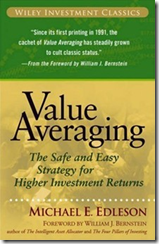
Value Averaging : Summary

image 

Systematic Investment Plans(SIPs), Value Investment Plans (VIPs), Value Averaging Transfer Plan( VTP) , Dollar Averaging Concept, Value Averaging Concept,  are ALL usually associated with answering a question – “ How to invest money over a long period of time to get adequate returns, given that it is impossible to time the market exactly ? “.

It has been quite some time since I had done any analysis at a portfolio level. Was occupied in doing something on the relative value arb stuff . So, my mind was a VERY RUSTY and was not in a PLUG and PLAY mode for portfolio analysis. The moment I started looking at the plans available in the market, the first thing that hit me was- “Where is the mention of Risk in these products “? Yes, risk is an abstract quantity which can be defined in more than one way, but shouldn’t that somehow figure in an investment plan ?. SIPs , VIPs, VTPs are all focused /designed based on returns and they have no mention of risk! . At a 10,000 ft , it looks like they can be summarized as a mix of contra-trend following  + formula based investment strategy.

Quote for the day

Instead of wondering when your next vacation is,

maybe you ought to set up a life you don’t need to escape from.

-- Seth Godin ( Tribes)

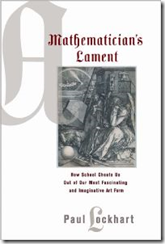
Mathematician’s Lament : Summary

image

In US, it is widely believed that math education at school level needs a BIG reform. The comparison is with respect to Asian kids who supposedly do well in math.  My strong belief is that math education is broken in some of the Asian countries too, including India. One might mistake the immense problem solving exercises that most of the Indian kids go through to get to engineering colleges as a strong foundation for mathematical thinking. Nope. Having gone through the system myself, I think that most of the Indian students are good at pattern recognition in problems that they are posed, that too a specific kind of problems that figure in the entrance examinations.

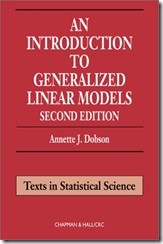
Introduction to GLM – Summary

image

A few weeks ago , I realized that my GLM knowledge was pretty rusty as I was struggling to get meaningful estimates from a poisson regression. 

Decided to immerse myself over the weekend on what I gather to be one of the best books on GLM , written by Annette J Dobson. Well , there is always the classic monograph by Nelder & McCullagh , “Generalized Linear Models”, that one can refer to , which to me was a little too dry to go over.  So, there is that little guilt feeling in me that I have never read the classic monograph from the father of GLM(J.A.Nelder) . I have always found this to be the  case in quite a few stuff that I have learnt over the years. For example, I have never read till date,  Bjarne Stroustrup’s C++ , the supposedly classic book on C++. However I have coded C++ like crazy and have used C++ to perform whatever that was needed . So, I always have this guilt trip whenever I think of C++. Well, may be someday I will go through the classic book .  In a similar vein, I will go through Nelder’s classic stuff someday, hopefully :)

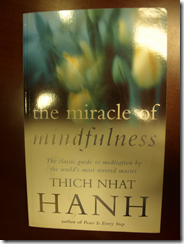
Miracle of Mindfulness

image

Written by Thich Nhat Hanh, a Buddhist monk, this book is a classic volume on the importance of mindfulness in our lives.  The author introduces mindfulness with a Zen story  - “Washing Dishes to Wash Dishes “.

The central message from this book is to be completely mindful of whatever activity one is doing.

Be it ,  preparing tea  / exercising /  gardening / telling a story / talking to a friend / doing office work /  whatever be the kind of activity one is in to, by being completely present in the moment , one develops a deeper understanding of oneself and can remain in peace , irrespective of the outcome.

Quote for the day

Not knowing how to feed the spirit, we try to muffle its demands in distractions.

Instead of stilling the center, the axis of the wheel,

we add more centrifugal activities to our lives—which tend to throw us off balance.

- Anne Morrow Lindbergh ( Gift from the Sea )

Rework

image

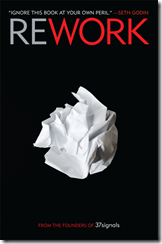
I am a great fan of 37 signals. I have been using backpackit service for the last 5 years and have always loved the web app for its simplicity and UI design. The fact that Ruby on Rails got a major push because of the founders , is one of the best things to happen for people who believe in rapid prototyping,  as they  could  use Ruby on Rails to quickly test the traction for their web app ideas.  

Quote for the day

Textbooks and curricula in psychology almost never teach the statistical toolbox, which contains tools such as descriptive statistics, Tukey’s exploratory methods, Bayesian statistics, Neyman–Pearson decision theory and Wald’s sequential analysis. Knowing the contents of a toolbox, of course, requires statistical thinking, that is, the art of choosing a proper tool for a given problem.  Instead, one single procedure that I call the “null ritual” tends to be featured in texts and practiced by researchers

The Big Short : Summary

image

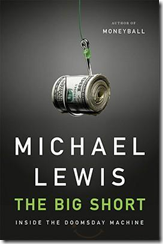
One line plot of the book is – “ How side bets accumulate and go on to become a BIG bet ?

If you have read any of John Grisham books , you will be aware that he has the gift to turn any boring law suit in to a thriller ride for you.

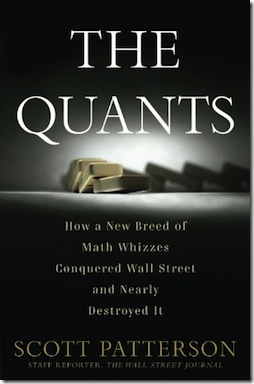
Michael Lewis weaves one such story of the financial markets, where the protagonists , unlike fiction books, are very much real life characters, who go on make tons of money in the subprime crisis. The nice thing about this book is that it talks about people who DID something. I mean, you tend to read about people who saw it coming, people who predicted, etc. Well , may be.So what ? But there were very few people who had the guts to actually believe in what they predicted and took bets. Were they just lucky ? May be, But if you look at the massive bets these few people took and the way they took it calculatedly,  it seems very likely they saw that “Emperor had no clothes” and actually did something about it ,  take positions so that , by the time everyone knew and aired out the opinion that emperor had no clothes, they would benefit immensely.

iMoney

image

The title of the book is completely misleading. It has no specific strategies mentioned at all. This book in that sense has a completely bogus title probably meant to deceive people.

It merely lists the advantages of owning an ETF over an index fund / active managed fund. It then goes on to list a variety of ETFs and traces their evolution in a few sentences. You can get this knowledge by merely looking up on the web for a few minutes about the various ETFs that are available for an investor.  One does not even get an idea about some basic metrics relating to the ETF Space. 

The Perfect Portfolio : Summary

image

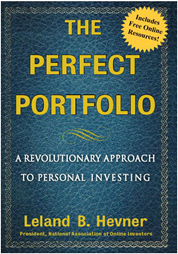
Trading Markets have been swamped by a variety of financial assets and subsequently, investment world has witnessed an exponential rise in the number of funds managing these diverse assets. Gone are the days when the investor had to allocate capital between just two segments, bond funds and equity funds. In the current scenario, the options have exploded. The number of Gold funds, sector specific funds, emerging market funds, country specific funds etc have been growing rapidly but the returns across all these investment vehicles have been completely random. Who performs on a consistent basis ? is a million dollar question . In such a situation, what should be investor doing?

Spurious Regression

imageRegressing I(d) processes is fraught with danger of mis-specification and nonsense estimates. We often see analyst reports where a stock is being regressed with a composite index to find the beta of the stock OR two stocks are regressed to find the relative beta etc . If one looks at those numbers closely from a stats perspective, most of the estimates are complete non sense. 

Most often , knowingly or unknowingly , one tends to apply regression amongst non stationary series and then tries to use the estimate as though the regression has been done on stationary series. In one of the references to a paper I was reading, there was a quite a praise showered on a paper by Philips (a Yale Prof), titled ”Understanding Spurious Regressions”,(1986).  It made me curious enough to go through it carefully.

Clive & Rob on Nobel Prize

Rob Engle and Clive Granger discuss about the importance of good ideas for doing productive work.

Some thoughts from Engle’s talk  :

To see what is in front of one’s nose requires a constant struggle

 To select well among old things is almost equal to inventing new things

 The universe is full of magical things, patiently waiting for our wits to grow sharper

Quote for the day

Via Leo Babauta

You can’t change your entire life.

You can only change your next action.

You can’t change a relationship with a loved one.

You can only change your next interaction.

You can’t change your entire job.

You can only change your next task.

You can’t change your body composition.

You can only change your next meal.

You can’t change your fitness level.

You can only start moving.

You can’t declutter your entire life.

Joy 24 x 7

My Yoga teacher suggested me to go through some talks by Sadhguru and particularly on Isha Yoga and Isha Foundation. Some of the videos are available on the internet

Well, as usual I was pretty sceptical about the so called guru culture and the kind of double lives that they lead, as portrayed by the media.

Till Date I had never heard of Sadhguru  and only because my teacher asked me to read about him / listen to him, I tried looking him up on the net. I have found him to be a superb communicator with immense clarity in his thinking. Thankfully he does not advocate any religious beliefs or dogmas.

A Primer for Unit Root Testing : Summary

image

There are two issues which have been occupying my mind ever since the trades that I had suggested have gone wrong.

  1. Type I error( trade when there is no signal) , i.e trade when the series is non stationary. Typically this is relevant to unit root testing where the null hypothesis says the series is random.

  2. Is the spread  really a result of cointegrated time series ?

    Each issue requires detailed understanding of time series concepts. This post deals with the first aspect.

Unit Root

Testing Stationarity of a series is an activity which has to be carried out by any quant trader, irrespective of whatever the frequency of data that is being used to develop models. Hence the amount of literature on Unit Roots, is  VERY HUGE.

Here is an interesting and simple way to test it. This note is refreshingly different from the usual stuff that one comes across in Unit Roots. It uses F test as a filter before going to the traditional tests. What does this twist of using F test do ? Well, it increases the power and reduces Type I error of the null hypo that the series is non stationary.

Quote for the day

“Millions long for immortality who don’t know what to do with themselves on a rainy Sunday afternoon.”

- Susan Ertz, Anger in the Sky

The Checklist Manifesto : Summary

image

The title of the book makes it obvious for anyone what’s in store for them in the book. At some point of time or the other, we all would have made a list of something in our lives… Grocery list, Books to read list, Things to do list, Steps in an algo while coding, List of aspects to be checked in unit testing/system testing, List of steps in a process (that is outsourced to a call center where standardization is the key) , List of items to be back packed, etc.