Quote for the day
Via Jayanth:
The relationship between two members of a family should be like fish and water,
but its should not be like fish and fisherman.
Via Jayanth:
The relationship between two members of a family should be like fish and water,
but its should not be like fish and fisherman.
Via ZenHabits:
Have a disconnect time each day. It’s like setting office hours if you’re a professor — you set the times that work best for you, and you can even let people know about these times. Let’s say you are disconnected from 8-10 a.m. each day, or 4-5 p.m., or even anytime after 2 p.m. Tell people your policy, so they know you won’t be available for email or IM. And use this time to create.
“Human beings don’t like to trade against human nature, which wants to buy stocks
after they go up , not down”
_
- Nunzio Tartaglia (Pioneer of pairs trading)_
Even though this technique is Stat arb 101, the advantage of this method is designed more to exploit the investor’s over-reaction to the events.
The race is NOT always to the swift, but to those who keep on RUNNING
- Nike Caption !
I started blogging a few years back, a big thanks to my friend TP who motivated me…. Today Typepad had a message that I have blogged my 1000_th_ post. Did blogging help me? Its a resounding yes because I have understood things better once I had written them down, most relevant in this case are book summaries.
To Be of Use
- Marge Piercy
The people I love the best
jump into work head first
without dallying in the shallows
and swim off with sure strokes almost out of sight.
They seem to become natives of that element,
the black sleek heads of seals
bouncing like half-submerged balls
I love people
who harness themselves, an ox to a heavy cart,
who pull like water buffalo, with massive patience,
who strain in the mud and the muck to move things forward,
who do what has to be done, again and again
It has been almost 2 years since I have read any fiction book. Had to go to a nearby mall to get my weekly groceries, when I saw this book. Did not have any great inclination to pick up such a book but did an impulsive purchase .On Sunday evening, felt like taking a break and read this book in a few hrs time. Well, the book is a work of fiction where the protagonist meets his dead mother and has conversations with her , just when he decides to commit suicide. This book is a gentle reminder to readers that one has to take time out and be with their mothers,because not doing it consciously might result in a day , when they realize that its too late and they can never go back in time and make their mothers happy.
Nice points about “working out” via Zen Habits
Exercise:
Recently I came across a nice illustration which captures the work of a data analyst. Each of the tasks mentioned below requires a specific set of skillsets and if one can work on learning at least 30-40% of skills from each of the disciplines mentioned, then data analysis becomes really interesting. One can walk through the entire task list and subsequently hope to understand things and probably build some useful models.
**
“First we make our habits, then our habits make us.”
**
- Charles C. Noble
Via NYTimes :
But as I traveled the land, the data did not fit the framework. The children of the lower castes were hoisting themselves up one diploma and training program at a time. The women were becoming breadwinners through microcredit and decentralized manufacturing. The young people were finding in their cellphones a first zone of individual identity. The couples were ending marriages no matter what “society” thinks, then finding love again. The vegetarians were embracing meat and meat-eaters were turning vegetarian, defining themselves by taste and faith, not caste.
It’s Saturday morning and it’s pouring in Mumbai. A perfect setting for a cup of hot tea and a book. Simple pleasures of life:) are sometimes all that one needs, I guess.


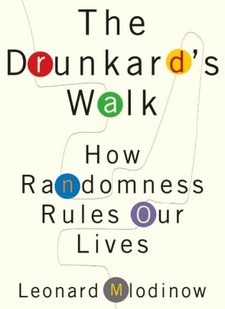
Was planning to read this book for quite sometime as it was touted as a book similar to “Against the Gods” and “Lady Tasting Tea”, books which I thoroughly enjoyed. After recovering from a brief illness this week, I thought I should spend my time peacefully with a book and managed to read this book in about 2 sittings. Let me summarize this book:
Here is a TED talk by Dr.Arthur Benjamin ( Mathemagic ted talk person) who says, that stats & probability should be elevated to the status that is given to calculus
I was familiar with this technique, had used it in a couple of places. This week I had a chance to apply this technique to a problem at hand. However, this time I did not want to rush in . Had in my archives an old book called “User’s guide to Principal Components”. Took some time out to know a bit more about the technique. As always, there is always some new learning by reading old stuff.
Parsimony is desirable but not always obtainable
- Edward Jackson (PCA Practitioner)
I guess it’s true sometimes, about of our lives too !.
With easier access to raw computing power, one might think that all it takes is to analyze data and let the data throw hypotheses.
Is theorizing over in this data intensive world ? Has the world become so complicated that theorizing is useless? May be not.
I read this short note(Tom Swift and His Electric Factor Analysis Machine) couple of years back but I always reread it frequently so that I dont make the mistake of living only in an empiricist world. Some amount of apriori assumptions/ hypotheses are required. In the financial world, traders provide this knowledge. It is easier sit at a desk and crunch data and build models. However it might be a complete useless exercise if you do not marry apriori assumptions with your empirical work.
Via NYTimes:
Robert Gentleman & Ross Ihaka (people behind R)
“R is a real demonstration of the power of collaboration, and I don’t think you could construct something like this any other way,” Mr. Ihaka said. “We could have chosen to be commercial, and we would have sold five copies of the software.”
“The great beauty of R is that you can modify it to do all sorts of things,” said Hal Varian, chief economist at Google. “And you have a lot of prepackaged stuff that’s already available, so you’re standing on the shoulders of giants.”
Often times most of the data / variables that we come across appear random and we start taking decisions based on gut. If gut works , its great. However before bringing in the gut part , it might be sensible to stretch a bit and look at data carefully and examine the details.Some time, just by changing the our view, we might see patterns. well PCA is all about that. I don’t have to go that far to make this point. For example, if one looks at the current graph of sin(x) for some values of x, it looks like this:
In God we trust; all others bring data.
—Dr. W. Edwards Deming
Paul Graham on Google :
Their hypothesis seems to have been that, in the initial stages at least, all you need is good hackers: if you hire all the smartest people and put them to work on a problem where their success can be measured, you win. All the other stuff—which includes all the stuff that business schools think business consists of—you can figure out along the way.
**A Random sample of my thoughts
**
…………………………..May be I will find clues to the above stuff, someday!
Handling large amounts of data in R is tricky as R typically loads the entire dataset in to RAM. While this means that computations are going to be very fast, it also means that dataset that can be used for analysis is dependent on your RAM. One solution which I stumbled on was Filehash which seemed to offer me a solution than the usual way that I was going about. I was getting the entire stuff in postgreSQL and then doing computations using R.
Jay Walker @ TED shows evidence of the english mania. This year, China is going to be the country with the largest number of english speaking people. Mass chanting of english sentences is something which I have never heard of, till date!
But in China…
As we all know, every kind of work involves a definite amount of tedious, unpleasant,low-mid IQ work.I don’t subscribe to these labels though.
In the life of a data analyst, the data preparation and data cleansing is something which has to be done before he/she can even think of doing any sane analysis. So, how does one approach data prep and data cleansing? Is it something to be looked down upon ? Well, I was under that impression many years back. My view changed completely when I took the effort to understand the complexity of data prep and data cleansing phases. Also, I began to develop this feeling that working on these phases gives a tremendous amount of insight that no modeling on the cleansed data would give. Here is a fact which is interesting : Renaissance hedge fund employs around 25 top notch PhDs to work on data treatment such as missing and capping treatment, outlier effects etc. No wonder this amount of care at the initial stages translates to tons of insights in to the arb opportunities in the market. Many years working on databases, I have kind of developed great love towards it. One of the things which is a pre-requisite to successful modeling is data prep phase. Working on data, which to this day, many people have an aversion is a fascinating place to start the analysis. However I am amateur in terms of the possibilities that lie in DBMS world. I have to understand and implement lots of things in this space, at least in relation to fin world. KDB+, Hadoob(TP keeps reminding of this fascinating world that I have not explored at all). Well, I guess it is a life long process.
Via TP:
Caters to a nice gap and it is touted as a service which democratizes hedgefunds - http://www.covestor.com/how/
Will this make money ?
**“What can be done with fewer is done in vain with more”
**
_- William of Ockham
_
This school kid is amazing and as good as George Sampson(2008). He is definitely one of my fav , to win 2009.
Watch him @ BGT-2009:Aidan Davis
Continuing from my last post where I had left the juicy part of the book for this post, here I go :
The last topic contains ideas which I find fascinating. Markets are complex adaptive systems and one can understand it better if you have systems thinking. Peter Senge’s Book “The Fifth discipline” had a great impact on my way of thinking and each essay in the last part of the book is a suggestion towards developing such a kind of thinking.
Via FE:
_With a rising number of market participants closely tracking India Vix, the volatility index that indicates markets’ expectation of volatility in the near term , the National Stock Exchange (NSE) would like to start trading in the index. An NSE official said the exchange would soon approach the Securities & Exchange Board of India (Sebi), the market regulator, for its approval.
_Introduction of Vix Futures and Vix Options would start an interesting phase in Indian markets.
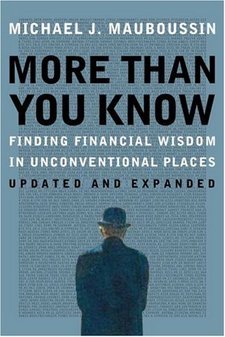
This book contains about 30 essays , meaning 30 ideas which can be read, ruminated and possibly applied in real life situations wherever they are applicable. Though the book is about finance, it draws considerable amount of research evidence from Biology, Math, Sociology,etc . At a 10,000 ft view , actually each discipline is nothing but an effort to understand the world using a set of constructs.
I would term Finance as a soft science rather than hard science where the discipline needs to be understood from various eyes . For a number cruncher , it becomes all the more important to realize that numbers,statistics is after all ONLY one part of the story in markets. One must consider market as a complex adaptive animal where numbers is ONLY one part of understanding. The more the mental models one has, the better one is equipped to understand what’s going on.
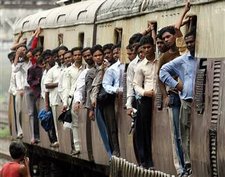
Today I had to leave work early to go to Bandra to pick up some stuff from NSE. I had to be at Bandra by 6PM and there was no way I could reach Bandra with in a short time other than taking up a fast train from Churchgate. I took a fast train and as the train moved , there were 2 youngsters , early 20’s I guess, who were standing next to me, infact literally falling on me as the compartment was jam packed. I could not help but overhear their conversation. They were recounting some of their campus experiences a year ago. It was clear that they had graduated from one of the engineering colleges and hearing their lingo, it was easy to guess the institute. In any case, the thing which was caught my attention was that they were discussing /debating/ ruminating about some delta hedged position on an index option!!.They were both working for some brokerage firm in Mumbai and were barely an year in to their job. I somehow have this feeling, that when options are discussed by youngsters in a jam packed train compartment, it is a sign of positive things to come, as far as financial instruments evolution in India is concerned.
It is amazing what you can accomplish if you do not care who gets the credit
- Harry S Truman
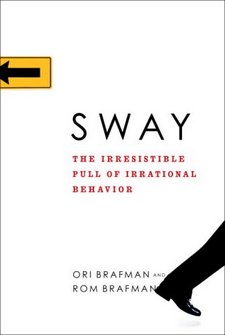
It is almost 2 months since I read a book. Finally after the bhag daud in Mumbai , managed to find time to peacefully sit and read a book. Thanks to Sanjiv Sir’s awesome book collection, managed to get my hands on “SWAY”. The first time I came across a mention about this book was when a trader recounted his experience about a Variance swap trade and related his behavior to that explained in the book “SWAY”.
Many people around the world, after the subprime crisis more so , equate correlation with charlatanism. May be , but should that stop anyone from understanding data, not really. Knowing whatever metric about the unknown is much better than just having an intuitive feeling of things. Sometimes having a wrong map while exploring is OK, atleast it gives one confidence to venture and try things out.
Taylor effect is one such aspect about correlation. If you look at a series of returns and consider various metrics, like abs(ret), (ret^2), abs(ret)^2.5 and so on, one can think of this question :
“To reach a port, we must sail -
sail, not tie at anchor -
sail, not drift. "
-Roosevelt
NSE in its new circular has dropped about 25% of the stocks from Futures and Options Segment.
Well before the number surprises you, the actual numbers are not that terrifying considering that the whole equity F&O market itself is small as compared to developed countries.
There were only 252 stocks that were allowed to be in F&O segment at the beginning of the year. 68 stocks have been dropped in this year citing liquidity reasons, stock manipulation etc. Hope these 184 scripts remain and provide liquidity to the market.
Bid ask spread movement is an interesting metric to track in a day. It has been observed in developed markets that it follows a U shaped pattern
More details in this paper :Limit orders and Bid-Ask Spread
In Indian markets case, came across a 3 pager in Economics and Political weekly that says that the bid ask spreads do follow the same U pattern.
Link : Are you getting a good deal?
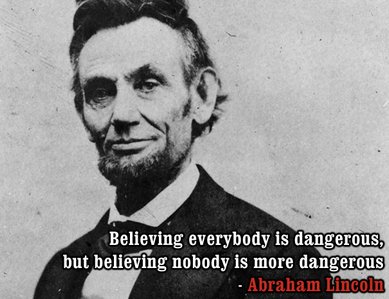
“The best thing about the future is that it comes only one day at a time” - Lincoln
Academic literature on GARCH and flavors of GARCH runs in to tons of papers by various researchers. The idea behind GARCH and all its flavors is that there is a conditional variance equation governing the evolution of usual returns, the residuals of which were otherwise assumed homoscedastic. There are a lot of variations of this conditional variance equation which gives rise to various flavors of GARCH.
Some of the markets have seen EGARCH performing better than other flavors. In Indian markets though , some of the literature suggests that GARCH(1,1) outperforms ARCH and other flavors. Some researchers have also tried to improve GARCH(1,1) forecasts by incorporating Implied vol of the options as one of the predictors!!.However the data used in all these models is before the great crash in Indian markets where vix has seen crazy levels. Markets in 2008-2009 has seen Indian Market capitalization shrink from ~1T USD to 0.6T USD . A quick look at the Nifty log returns gives a good indication of the crazy vol levels that Indian markets is seeing. BTW, India VIX as of today is above 50. So, it was natural for me to think about Asymmetric GARCH in these markets and there might be a case for AGARCH models
Via NYT:
“If a foreign-born engineer doesn’t come to Google, there is a very good chance that individual will return to India to compete against us.”
Smiles & Smirks are what one would get to see about Vols in US Markets. However a quick crunching of NIFTY options show that implied volatility is more V Shaped. Infact Puts are tilted towards right and Calls towards left. Here is an illustration between moneyness and implied vol.
Something to think about :How do you model this quasi V shaped market phenomenon ? and more importantly How do you make money ?
Salih Neftci– Any student in the quant world would have come across this professor while reading either of his wonderful books on option pricing. He was a very popular professor in the NYC area and more so at CUNY. Some of my friends who attended his classes were all gaga about the way he brought things to perspective.
Came to know from my director that Prof Neftci passed away last night in Switzerland, after a one-year battle with cancer. Student community will miss him dearly.
Came across a wired article which says the following copula formula by David X.Li was widely used for securitization models. Results are known to everyone now!
Link :Wired
Via TradersMag:
“And anybody who has been using pairs with options is making a fortune right now with the volatility, said Eric Goldberg, chief executive of the EMS maker Portware. “The last [12] months have just been a dream for these guys.”
Pairs and arb traders have accounted for some of the strongest growth in Portware’s client base of late, Goldberg said. Originally, Portware’s EMS was built as an index-arb system, he added.
Michael Lewis : Since the beginning of the crisis I’ve wondered why the government has found neither the will nor the way to attack the root of the problem – the people who borrowed money to buy homes they shouldn’t have bought.
Link : Bloomberg
If Destination is “Make Something People Want”, the means ought to be - “Relentlessly Resourceful”, says Paul Graham
Link : Paul Graham
“If Opportunity Doesn’t Knock……..Build a Door”.
Bought this book in India for $2 , less than the shipping cost of an item from Amazon!. Price difference of books sometimes amazes me. If one really wants to read a set a books, one can manage the stuff with a very lean budget in India.
This is a book about outliers. In some sense, everybody wants to be an outlier. Ask any person and he/she might say " I want to be different" . He/She wants to be different. However there are only few people in this world who manage to be very very different from the rest of us, as far as the eventual world-measured-success is concerned. This book emphasizes one single point through out. Outstanding achievement/Success is made by certain individuals because of the culture they belong to. There could be many variables that effect the success of an individual. Malcolm Gladwell takes one such variable, culture, of the individual and tries to weave experimental and anecdotal evidence to argue that , culture, probably could be one of the most significant variables that determines success of an individual.
Key takeaways from the discussion :
This discussion reinforces my belief : Being a fox is better than being a Hedgehog!