“glmnet” webinar
Introduction to Bootstrap Methods with Applications to R
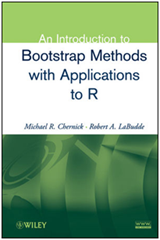
It was bootstrapping that made me start off on my statistics journey years ago. I have very fond memories of the days when I could understand simple things in statistics without resorting to complicating looking formulae. A few lines of code were all that was needed. Slowly I became more curious about many things in statistics and that’s how my love affair with stats began. There are two bibles that any newbie to bootstrap should go over; one by Efron & Tibshirani and the other by Davison & Hinkley . Any other specific topics, you can always understand by reading papers. It is always a nice feeling for me to read stuff about bootstrapping. However reading this book was an extremely unpleasant experience.
Melodious Hamsadhvani
The imprecision of volatility indexes
The paper titled, “The imprecision volatility indexes ”, analyzes VVIX, the vega weighted VIX, an estimate for the 30 day expected volatility. Market participants have always wanted some kind of quantitative measure for the volatility. CBOE introduced VIX based on the Black Scholes volatility of ATM options and later changed it to a method that is based on observed option prices. The latter method in the finance literature goes by the name, “model free method”, because it uses a replicating portfolio argument of pricing a variance swap. Having said that, it is not as though it is completely “model free”, after all the risk neutral expectation of a variance swap computation assumes basic GBM with constant volatility for the stock price evolution.
How Normal is a family of distributions
In every elementary statistics textbook on inference you will find the following question
How to draw an inference on a correlation estimate between two variables ?
An inverse hyperbolic tangent transformation is applied to the correlation coefficient, which then is shown to be distributed as a normal random variable.This transformed variable is then used to compute confidence intervals on the original scale.
If one is curious, a natural follow up question would be,
What’s wrong with VIX
The paper titled, “Extracting Model-Free Volatility from Option Prices: An Examination of the VIX Index ”, is a very interesting paper that talks about the problems in the VIX index computation that is currently being used at CBOE. Other stock exchanges throughout the world are also following a similar method for disseminating VIX, called the fear index. One of the most interesting conclusions of the paper is this :
VIX underestimates the true volatility in times of panic, i.e. when we need the fear index the most, it acts as an imprecise gauge
Derman’s Berkeley MFE Commencement Speech
It’s truly a great pleasure for me to be at the University of California at Berkeley today. Not quite 50 years ago, when I was an undergraduate studying physics in Cape Town, I began applying to go to the United States for graduate school. It seemed to be the right thing to do if you were serious about your field.
So I applied to three schools: Columbia, because I knew someone in Cape Town who had just gone there, and because it was in New York City; Caltech, because Feynman was there and had recently been awarded the Nobel prize and also published the stylish and insightful Feynman lectures on physics, though I didn’t understand at the time what he had actually accomplished; and Berkeley, because it was in the news for the start of the revolts against arbitrary authority on campus. I read the other day that year is the 50th anniversary of the Berkeley Free Speech Movement that seem to me to have kicked off the Sixties. For those of you who are too young to remember that, which I suppose is all of you graduating today and maybe much of the faculty too, take a look — it’ll make interesting reading.
More than you ever wanted to know about Volatility Swaps
The note titled,” More than you ever wanted to know about Volatility Swaps ”, written by Derman, Demeterfi, Kamal and Zhou, is a fantastic fifty page write up highlighting many aspects of valuing a variance swap and a volatility swap. I love the structure followed in the note. Instead of heading right in to the math behind valuation, the paper gives starts off by giving a superb intuition into the need for variance swap and how does one go about pricing a variance swap with nothing more than common sense. In this blog post, I will summarize some of the points from the note.
The Log Contract
The article titled, “The Log Contract ”, is a 20 year old article. It was first article that made a case for the need for a new instrument to hedge volatility. There is something nice about papers written in the old times. The authors give a healthy intuition about the stuff they are about to explain in the paper, use simple equations that do not require too much of “head banging” and at the end of it, the reader pretty much gets the gist of the paper. Such papers are rare nowadays. In today’s world, pick any finance/stats/quant paper, there are at least two dozen heavy references given in the appendix and a substantial preparation is needed to understand the key idea of the paper. Very rarely is a paper self-contained. May be that’s the way it is supposed to be.
What should a 20-year-old do in life
A Simple Long Memory Model of Realized Volatility
The paper titled, “A Simple Long Memory Model of Realized Volatility ”, is one of the most cited papers in the area of long memory volatility models.
One typically assumes that log prices follow an arithmetic random walk. In this kind of set up, it has been shown in the previous research that integrated volatility of Brownian motion can be approximated to any arbitrary precision using the sum of intraday squared returns. In fact this statement is applicable at a more general class of stochastic processes – finite mean semi martingales (includes Ito processes, pure jump processes, jump diffusion processes). Sum of intraday squared returns, ``Realized volatility, is a nonparametric measure that asymptotically converges to the integrated volatility as the sampling frequency increases. The flip side to this utopian scenario is the microstructure noise that one needs to contend with as the time scales become finer. Noise introduces a significant bias in the RV estimate. Hence one has to make a tradeoff between measurement noise and unbiasedness. In many papers, researchers have used anywhere between 15 min to 30 min intervals, as they might have observed that as the shortest return interval at which the resulting volatility is still not biased. Another approach that can be adopted to deal with the microstructure noise is to filter away the noise using the autocovariance structure of k tick aggregated returns. Well one might have to search a grid to get an optimal k to begin with. In an earlier paper by Corsi , one such filtering method is described.
Choosing the Best Volatility Models
The paper, “Determining the best forecasting models ”, is about testing 55 models that belong to the GARCH family. If we have just one model and a straw model, it is easy to show that some statistic on the test sample that the hypothesized model is superior. How do we go about testing a set of competing models? There are many wonderful techniques in the Bayesian world. However this paper is more frequentist in nature. It uses a method called “Model Confidence Set” for deciding the best forecasting models. This is akin to forming a confidence interval for a parameter rather than a point estimate. What’s the advantage of Model Confidence Set ?
Liquidity considerations in estimating implied volatility
The paper titled, “Liquidity considerations in estimating implied volatility ”, by Susan Thomas and Rohini Grover, is about a new way of constructing volatility index that is based on weighing the implied volatility of the options based on the relative spreads at various strikes. The key idea behind the paper is that there is considerable liquidity asymmetry across various strikes for the near month and mid month contracts on NIFTY options. This leads the authors to hypothesize a measure that is based on weighing implied volatilities. The other indices discussed in the paper are VXO, VVIX and EVIX. The obvious question is,” How should these indices be evaluated, given that the volatility is unobserved”?
Efficient Estimation of Volatility using High Frequency Data
The paper titled, Efficient Estimation of Volatility using High Frequency Data , is about testing a set of volatility estimators using high frequency data. I will attempt to briefly summarize the paper.
For a person working in the financial markets, there is not a day that goes by without hearing the word, “volatility’’. Yet, it is something that is not observed. If you assume that stocks follow some random process like a GBM, then the relevant question to ask is, “How does one estimate the diffusion parameter/process in the model?” One of the principles from classical statistics, minimal sufficient statistics, says that, for estimating the volatility, every increment in the price process is needed. This means that any discrete sampling implies loss of information.
Bootstrap method for robust inference
The paper titled, Regression analysis with many specifications , uses stationary bootstrap method to evaluate a large set of models.
In a typical data mining set up, the problem of choosing the number of covariates can be handled in many ways such as
Best subset selection
Forward or/ and backward regression
Forward stage wise regression
Lasso
Ridge regression
Combination of Lasso and Ridge regression
In each of the above cases, the assumption is that covariates are independent. In a time series setting where regressors are lagged time series, the assumption of independence is obviously weak. Hence these methods might have limited applicability. Having said that, I guess that there are researchers working in ML/DM areas who are trying to refine methods so that broad range of techniques available inthe data mining field could be applied in econometrics. Ok,now coming back to the paper,
Consistent High-Precision Volatility from High Frequency Data
The paper titled, “Consistent High-Precision Volatility from High Frequency Data ”, talks about the trade off that one needs to make while considering sampling frequency. If you increase sampling frequency, the measurement error goes down but microstructure noise increases. If you decrease sampling frequency, the microstructure noise decreases but the measurement error goes up.
Researchers in the past have suggested the usage of 10min/20min/xmin intervals based on some visual tools that have fancy names such as volatility signature plots. The authors of the paper argue that there is a flaw in using such tools that work on homogenized time series. If such tools are used in tick time, the sampling frequency becomes so low that it discards most of the HFD.
Kathalaya
Mathematical Techniques in Finance : Review

Books on derivative pricing come in all shades and colors. Some books give a brief introduction of derivatives at a leisurely pace and then suddenly the content becomes very mathematical. There are some books that have theorems and lemmas all through. There are some books that talk about risk-neutral pricing giving very little intuition about the concept. In the gamut of books available, I think this book stands out for a couple of reasons. The fact that we all live in incomplete markets is addressed right from the beginning. This immediacy has the reader’s attention right away. If the markets are incomplete, i.e there are more state variables than the instruments, how does one hedge an exposure ? Can there be a perfect hedge ? If not, how does one compare between two or more hedging options? These are very practical questions for an options trader. An option trader intuitively knows that a perfect option hedge that is taught in a grad school is an idealistic scenario that holds good under a ton of assumptions. Real world is messy. Pick up any book where Black Scholes is derived; in 9 out 10 books, you will see measure theory as a prerequisite to understanding the content. This book though, does not to have a math heavy prerequisites as most of the book can be read with linear algebra, elementary calculus and probability knowledge. So, in a way, this book can be read by a wider audience. Even though this book uses many numerical simulations, the author also believes that
Quants: The new risk takers of finance
Via efincareers :
Quant traders working in investment banking are not happy. Squeezed by regulations that curb investment banks’ prop-trading activities and by cost-cutting that means that pre-crisis compensation packages have been consigned to history, job dissatisfaction is at an all-time low, according to industry observers.
Quantitative PhDs who would have usually gravitated towards high-paying roles in the financial sector are looking for alternative career paths, while those already working in banking are seeking to move on.
Data Dredging
Stumbled on to an interesting comment on crossvalidated which I think is a nice way to warn against using techniques such as best subset regression, forward step regression, backward step regression etc.
Wanting to know the best model given some information about a large number of variables is quite understandable. Moreover, it is a situation in which people seem to find themselves regularly. In addition, many textbooks (and courses) on regression cover stepwise selection methods, which implies that they must be legitimate. Unfortunately however, they are not, and the pairing of this situation and goal are quite difficult to successfully navigate. The following is a list of problems with automated stepwise model selection procedures (attributed to Frank Harrell, and copied from here ):
Zhou’s estimate
The paper by Bin Zhou, titled “High Frequency Data and Volatility in Foreign-Exchange Rates ” is one of the first papers in the finance literature to address the problem of volatility estimation in the presence of market microstructure noise.
Here’s my document that explains the rationale and the math behind the estimate.
Goldman’s desperate attempt
Via NYMag :
In news that is sure to stir hearts across the country, Goldman Sachs has decided to give a $15,000 annual raise to next year’s class of analysts (junior bankers typically just out of college, usually about 22 to 24 years old) as part of an effort to retain and attract top-level talent.
It’s an overdue move, and not all that surprising. Life as a young banker on Wall Street is a fairly miserable experience, and many young bankers are understandably fleeing the cramped bullpens of Manhattan for the free snacks and treadmill desks of San Francisco. Paying bankers more is one way to fight that attrition. But it’s not going to solve the biggest problem Goldman has.
High Frequency Manipulation at Futures Expiry
Here is a paper by IIMA working group that argues for automatic detection of market manipulation near expiry.
The essence of the paper is that, SEBI has to detect fraud and punish the manipulators, rather than putting measures to prevent fraud( which has proven inadequate in general). This paper is inspired by an episode in the Indian market where a group of entities resorted to manipulative trading, who were later barred by SEBI from trading in the capital markets.
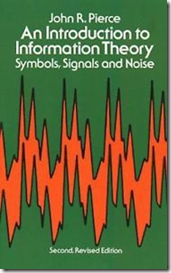
An Introduction to Information Theory
 Takeaway:
We see/hear/talk about “Information” in many contexts. In the last two decades or so, one can also go and make a career in the field of “Information” technology. But what is “Information” ? If someone talks about a certain subject for 10 minutes in English and 10 minutes in French, Is the “Information” same in both the instances?. Can we quantify the two instances in someway ? This book explains Claude Shannon’s remarkable achievement of measuring “Information” in terms of probabilities. Almost 50 years ago, Shannon laid out a mathematical framework and it was an open challenge for engineers to develop devices and technologies that Shannon proved as a “mathematical certainty”. This book distils the main ideas that go in to quantifying information with very little math and hence makes it accessible to a wider audience. A must read if you are curious about knowing a bit about “Information” which has become a part of every day’s vocabulary.
Essence of a Raag
“caret” author
Via Alok :
Why econometricians need to learn new tricks
Here is a write-up by Hal R. Varian that talks about the deluge of data that makes it imperative for econometricians to equip themselves with “big data” skills. Some of the main points of the write-up are :
Machine learning techniques such as decision trees, support vector machines, neural nets, deep learning and so on may allow for more effective ways to model complex relationships
Data cleaning tools such as OpenRefine and Data Wrangler can be used to assist in data cleansing
A Mind for Numbers

This book is mainly targeted at high school / college kids who feel their learning efforts are not paying off, teachers who are on the look out for effective instruction techniques, parents who are concerned with their child’s academic results and want to do something about it.
The author of the book, Dr. Barbara Oakley, has an interesting background. She served in the US army as a language translator before transitioning to academia. She is now a professor of engineering at Oakland University in Rochester, Michigan. In her book, she admits that she had to completely retool her mind. A person who was basically in to artsy kind of work had to read hard sciences to get a PhD and do research. Needless to say the transition was a frustrating experience. One of her research areas is neuroscience where she explores effective human learning techniques. The author claims that her book is essentially meant to demystify some of the common notions that we all have about learning.
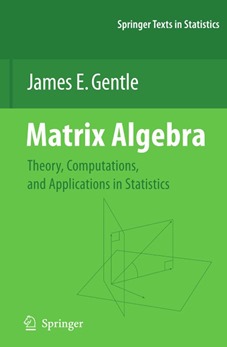
Matrix Algebra : Theory, Computations, and Applications in Statistics
We often come across mathematical expressions represented via matrices and assume that numerical calculations exactly happen the way expressions appear. Let’s take for example

These are the well known “normal equations” to compute regression coefficients. One might look at this expression and conclude that the code that computes beta inverts the Gramian matrix XTX and then multiplies the inverse with XTy. Totally false. Why? The condition number of the Gramian matrix XTX equals square of the condition number of X. The higher the condition number of the matrix, the more numerically unstable is the solution.This is the recurrent theme of the book by James E. Gentle.
Axler revisited
I was looking for something in my old stack of books when I stumbled on to Sheldon Axler’s fantastic book, ‘’Linear Algebra Done Right". I have fond memories about the book. I think the last time I referred to this book was more than 3.5 years ago. Took a few hours to go over the book again. Like wine that tastes better when aged, I think some books also give the same kind of effect, at least to me. A legitimate understanding of ANY discipline needs one to have a good grip on Linear Algebra. The more randomness in the field you choose to work in, the more you will use linear algebra, as you are forever looking for an approximate solution.
Curse of Dimensionality
Our intuition does not serve well in high dimensional spaces. Hence there are few issues with using nearest neighbor methods on high dimensional data. Firstly, the methods that involve capturing a fixed neighborhood around the points gives a high variance for the fit. Secondly, if you relax the fixed neighborhood criterion and try to capture a specific number of neighbors, the methods are no longer local. Hence it pays to think through these issues on whatever dataset you are working on. You might expect low variance fit but the curse of dimensionality shows up and you get a high variance fit.
Lehmann or Lie men
Via Tall Tales :
Mumbai street lamps
via humansofmumbai :

Studying here in Poddar galli (Abhyaas Gali Path) under a street lamp is my choice and its not only mine but for many students who come here in the night to study, the main reason being the environment and the peace which this lane gives me. This place is silent and one can study whatever one want, one don’t see the time, whenever one wants to come, one comes and there is undisturbed studying here.
Device that solves the “Puncture” problem
Optimal Liquidation
For any sell side trader, optimal liquidation is his bread and butter. Given any client order, the trader has to compete against two forces, market impact and volatility risk.
Market impact : If a large trade is executed too rapidly, costs will be incurred as the trades move the market in an adverse situation
Volatility risk : On the other hand, if the trade is executed too slowly, the the position is subject to risk during the time that the shares remain in the portfolio.
Google trends : Proxy in State Space modeling
Till date, I must confess that I have never read a “marketing” paper. So, when one of my friends wanted my comments on a paper that is published in JMR , June 2014, titled “Decomposing the Impact of Advertising: Augmenting Sales with Online Search Data ”, I thought I might encounter a lot of marketing jargon and might be put off. Thankfully there is lot less of it in the paper.
The paper is very interesting as it uses Google trends as a proxy for consumer pre-purchase interest. Historically most of the models that have been built have never decomposed sales data in to pre purchase component and a conversion rate component. The reason being that the data relating to pre purchase activity was tough to obtain and had all sorts of problems. Thanks to Google trends , one can get all the real time data that one wants. So, the authors of the paper use Google trends data relating to automobile purchase queries and use that as a proxy for modeling the latent state variable, “consumer interest in prepurchase information”. The authors analyze 21 cars in 4 segments and conclude some cool things which would not have been possible with out decomposing sales in to various components.
Is Deliberate Practice hyped

Stumbled on to a paper titled, “Deliberate practice: Is that all it takes to become an expert? ” that takes a hard look at the much talked about and written about principle of deliberate practice. Indeed there has a been cottage industry of books/ blogs/ articles that seem to propagate that “only practice matters and nothing else”. The paper does some number crunching and concludes that the whole idea might be a fancy thing just caught on. Yes, the authors who wrote about it and talked about it have made fortunes. But does it really deliver ? Reading the paper does give one a dose of reality check.
Temporal Aggregation of GARCH Processes
The paper titled, Temporal Aggregation of GARCH processes , by Drost and Njiman is a classic paper that introduces three forms of GARCH processes: Strong form of GARCH, Semi-strong form of GARCH and Weak form of GARCH. Only the Weak form of GARCH is appropriate for connecting volatility estimates and parameters of models built at various frequencies. In most of the literature on volatility estimation from high frequency data, the authors assume Weak form of GARCH.
Spectral Analysis of Time Series Data : Summary
 Takeaway :
Most of the phenomena in our world are periodic in nature. Yet, econometric courses at undergraduate / graduate level inevitably start from the time domain instead of frequency domain. This book is a great introduction for some one looking to get an overview of frequency domain analysis. All the principles are explained from a regression standpoint in the initial chapters. Discrete Fourier Transforms are gradually introduced to connect various ideas. Both univariate and multivariate time series are dealt at length with just enough mathematical rigor.
“Bin Tere” on Sitar
Intraday periodicity and volatility persistence in financial markets
The paper titled, “Intraday periodicity and volatility persistence in financial markets ”, by Andersen and Bollerslev is a 44 page analysis on volatility modeling and has close to 75 references. This paper is one of the widely quoted papers on intraday volatility modeling. In this post, I will give a brief summary of the main sections of the paper.
Introduction
Return volatility varies systematically over the trading day and this pattern is highly correlated with the intraday variation of trading volume and bid-ask patterns. The authors of the paper conjecture that intraday return dynamics is neglected primarily because the standard time series models of volatility have proven inadequate when applied to high frequency returns data. The paper demonstrates that the difficulties encountered by standard volatility models arise largely from the systematic patterns of average volatility across the trading day and explains a method to estimate and extract the intraday periodic component of return volatility. The datasets used by the authors pertain to intraday data and interdaily data for two assets, one from forex OTC market and the other a futures equity index contract. Most of the models used for volatility modeling on the intraday appear puzzling and in stark contrast to the aggregation studies. One does not find any relationship amongst the parameters of models build at different scales. The authors remark that
Stylized Facts
The paper titled, “Empirical properties of asset returns: stylized facts and statistical issues ”, by Rama Cont presents 11 stylized facts applicable to wide set of assets that should be always in a quant’s working memory. These stylized facts should shape one’s thinking in building financial models.
Stylized facts are the statistical properties of asset prices that are common across a wide range of instruments, markets and time periods. They are usually formulated in terms of qualitative properties of asset returns and may not be precise enough to distinguish among different parametric models. Nonetheless, these stylized facts are so constraining that it is not easy to exhibit even an adhoc stochastic process which possesses the same set of properties and one has to go to great lengths to reproduce them with a model.
Security Bid/Ask Dynamics with Discreteness and Clustering
Joel Hasbrouck in his paper, “Security Bid/Ask Dynamics with Discreteness and Clustering ” , uses Gibbs sampling for estimating the parameters of a stylized market microstructure model. For any model, there are many ways to estimate parameters. One of the common methods is the likelihood approach. Even though this approach makes sense intuitively, the computational complexity explodes as the number of parameters increase. The curse of dimensionality kicks in and hence parameters become notoriously unstable. On the other hand, estimation methods based on MCMC scale linearly with parameters. Thus MCMC becomes an important technique for dealing with curse of dimensionality.
The Right to be Forgotten :-)
Understanding the Kalman Filter
When I first encountered Kalman Filter technique, I was overwhelmed by the ton of approaches taken by various authors to explain it. It can be explained from an engineering vocabulary but I wanted to understand it from a stats point of view . One typically reads either the Frequentist approach( where Gaussian multivariate normal distribution is used to derive all the formulae) or the Bayesian approach where the usual prior-posterior stuff is used to derive Kalman Filter. Irrespective of whatever approach one comes across, unless one derives the Kalman Filter using pen and paper, it is tough to understand what’s going on.
Make it Stick : Summary

In today’s world, parents are extremely observant about how their children are learning. Be it academics or music or sport any other field that the child has developed a semblance of liking, the parent gives and seeks all the guidance available to make his/her kid’s learning process effective. Given the hyperconnected instant gratification world that we are all living it, Kids left to their own devices, become just that, in the literal sense. Their lives are surrounded by world of devices (cell phones, gaming consoles, ipod, ipad, etc.) and naturally they develop an affinity towards them. One doesn’t need some academic research to infer that attention spans are going down across all age groups, more so in children. In such an environment, can parents or teachers be confident that the children develops thinking and meta-thinking(thinking about how they are thinking )skills to become effective learners ?.
Dan Gilbert
Standard Volatility models do work!
The paper titled, “Answering the Skeptics : Yes, Standard Volatility models do provide accurate forecasts ” is a classic paper on volatility modeling by Andersen and Bollerslev.
What’s this paper about ? If you build a volatility model, How do you go about testing it ? This is the key question answered in the paper.
At a daily frequency or intraday frequency, returns do not show serial correlation. However there is a serial dependency amongst them. This needs to get reflected in one way or the other. One of the most popular models in finance are ARCH family of models. These models are characterized by two equations, mean return equation and conditional variance equation. I guess before this paper came out, many researchers had shown excellent in-sample parameter estimates for their ARCH model but failed to show the model’s forecasting power. For validating the ARCH forecasts, the common proxy of unobserved volatility is the returns squared estimate.
The Misbehavior of Markets : Summary
Crisis hits financial markets at regular intervals but the market participants keep assuming that they “understand the behavior” of markets and are in “total control” of the situation until the day things crash. There is an army of portfolio managers, equity research analysts, macro analysts, low frequency quants,derivative modeling quants, high frequency quants etc., all trying to understand the markets and trying to make money out of it. Do their gut /intuitive/quant models come close to how the market behaves ?.